Author: oi_admin

Why PUREcleaning is a Safer Choice than Traditional Cleaning Products

A lot of modern cleaning solutions take the approach that the more chemicals they contain the better – what better way to kill bacteria and harmful germs? Yet product recall after product recall shows that more chemicals aren't necessarily the solution to the problem. Millions of bottles of Fabuloso have been recalled, with Laundress and Pine-Sol amongst the impacted cleaning products.

In fact, the driving issue behind these recalls is the presence of bacteria in the cleaning product itself. Pseudomonas are bacterial organisms found in water and soil and can impact human health. Pseudomonas present a unique risk to people who rely on external medical devices, have respiratory conditions, or live with a weakened immune system. It can enter the body through broken skin, the lungs, and the eyes. These bacteria can cause bloodstream infections, as well as pneumonia and a range of other infections.

It's time to change the way we think about cleaning products and consider the power of non-toxic cleaning products. They are the safest solution and more effective than you might realize.

What is PUREcleaning?

PUREcleaning, exclusive to Maid Brigade, is one of the most advanced cleaning systems available today. It is an industry-leading solution that makes every environment safer, whether it's your home or office. It's a multi-point process designed to remove debris, dirt, and germs with a non-toxic solution. The first step is removing debris, dirt, and allergens by dusting and cleaning all of the surfaces using microfiber cloths. We have a color coding system to prevent the risk of cross-contamination between rooms. We use HEPA filtration vacuums to improve your indoor air quality.
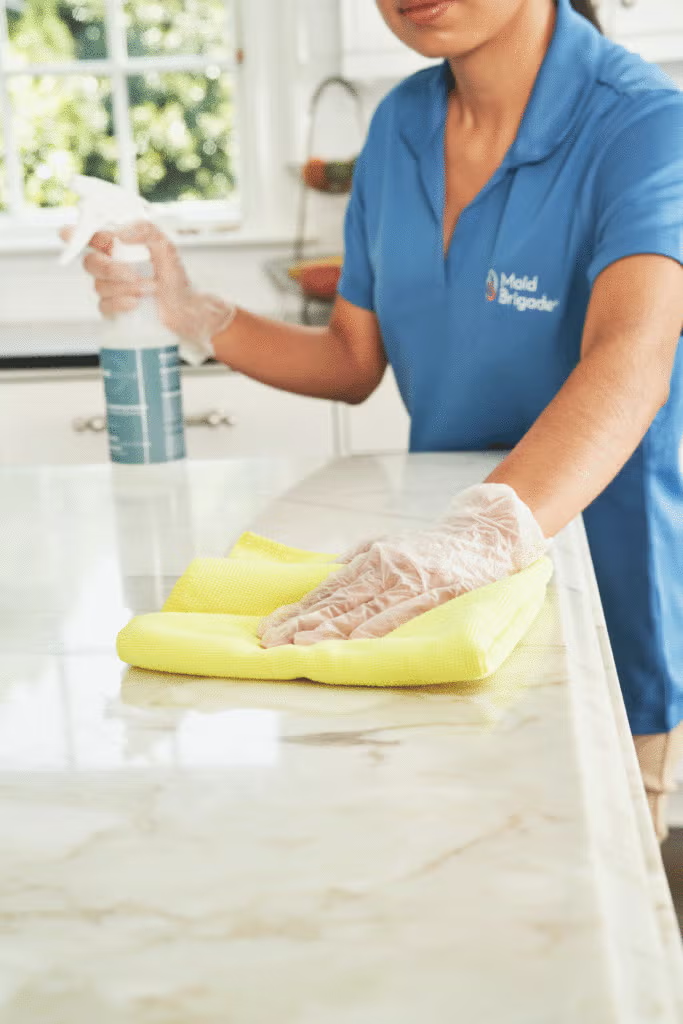
Gentle, yet powerful non-toxic muti-surface cleaner.

Electrolyzed water is the next step in the process – it's a clean, non-toxic solution that kills bacteria, viruses, mold, and mildew without the presence of dyes and powerful chemical odors. Electrolyzed water combines the power of salt and electricity to produce a non-toxic, gentle cleaning solution that cleans and disinfects. It breaks down germs the moment it makes contact which fully sanitizes your surfaces. It offers a complete clean and does not leave a chemical residue.

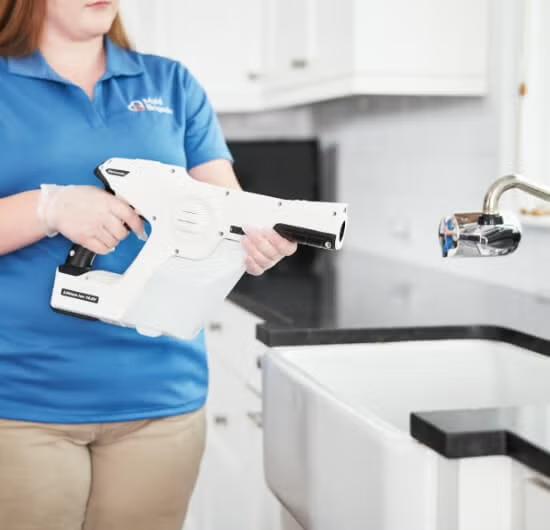
The final stage employs Maid Brigade PUREmist®, which is a powerful EPA-registered disinfectant. This is dispersed using a hand-held sprayer that kills germs to keep your children and pets safe. This mist is applied to every surface in your home and can reach into the nooks and crannies other cleaning products can’t reach. PUREmist® kills germs on contact and bonds directly to surfaces.

Benefits of PURECleaning Products Compared to Traditional Cleaning Products
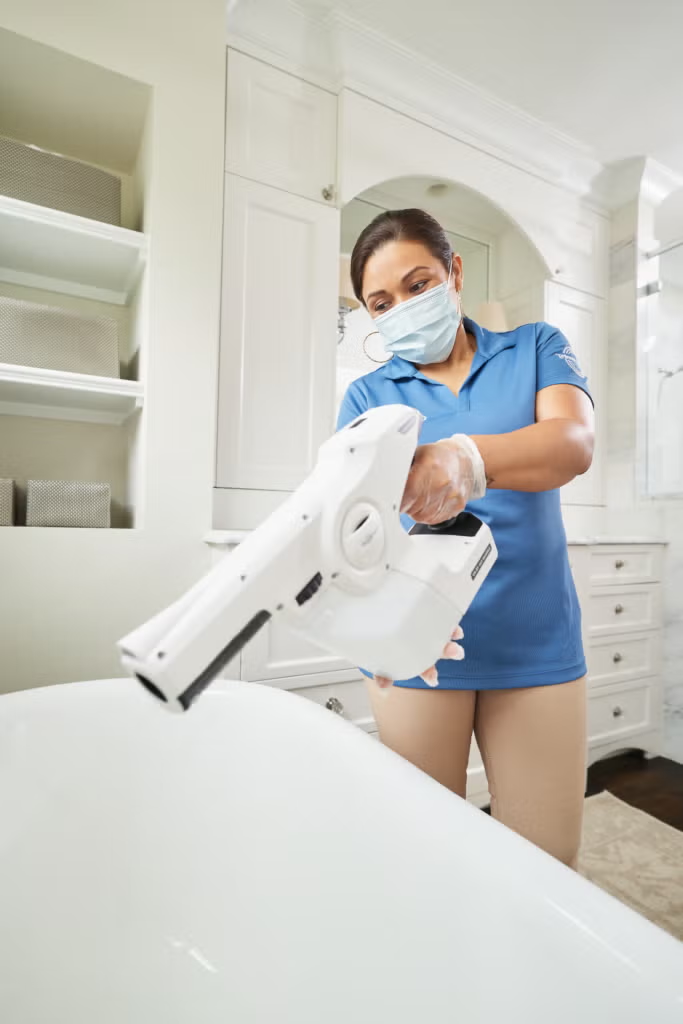
PUREmist electrostatic sprayer

Traditional cleaning solutions contain a wide range of chemicals and rather than breaking down germs, they bond with them. This means that no matter how hard you wipe or how much elbow grease you apply, you leave harmful residue behind every time you clean. Your home becomes a safe space for bacteria, allergens, and dirt.

One of the major drawbacks of using traditional cleaning solutions is that chemicals leave powerful odors. For anyone with allergies, asthma, or other respiratory issues, this can trigger attacks. PUREcleaning doesn't leave a chemical odor, but it does deliver on clean.

Studies have shown that eco-friendly cleaning solutions reduce the health risks of professional cleaners, with traditional cleaning solutions resulting in higher levels of respiratory, dermal, and even musculoskeletal symptoms.

Choose a Cleaning Service that Offers Eco-Friendly Cleanings for Your Home

With traditional cleaning solutions now at greater risk of contamination of the very thing they are designed to protect against, non-toxic cleaning solutions provide you with the safest cleaning possible. An eco-friendly cleaning is safe for the environment, and more importantly, they are safe for your environment. You can rely on non-toxic solutions to kill germs and keep your home crystal clean.

Additional Sources

https://www.cdc.gov/hai/organisms/pseudomonas.html
https://www.webmd.com/children/features/safer-cleaning-products


How to Prepare Your Home for a Professional House Cleaning

Preparing your home for a professional house cleaning is easy with Maid Brigade by your side. Preparations simply mean making sure our teams can effectively clean and reach all areas of your home when we provide our services.

With a few basic things in mind, preparing for a cleaning session would be a piece of cake!

Make Cleaning Areas Accessible

Ensure the areas that need to be cleaned are ready to be handled by our cleaning team. This means removing any personal objects that you don’t want to be meddled with from the countertop, floors, and other surfaces.

Communicate Your Expectations

If you hired an independent cleaner, you would need to spend a lot of time preparing your house for cleaning. On the contrary, our professional cleaning services ensure you do not have to worry about taking care of all the nitty-gritty details.

Just let us know your expectations beforehand. A few examples include:

  • Which areas to focus on the most?
  • Are there rooms you prefer we don't clean this time around?

Integrate Your Preparations with Morning Routines

When you schedule regular cleaning service from Maid Brigade, such as, weekly or biweekly, the most effective way you can sustainably manage the preparatory tasks is to tie them with your morning routines.

Doing small tasks, like organizing any personal items, ensuring the cleaning team has easy entry into your home, and calling us about any special instructions will make your scheduled house cleaning go smoothly.

A Few Other Essentials

Here are a few basic things that you probably have already taken care of, but are important to your house cleaning experience.

  • Allow access to your professionals as per your security system.
  • Make sure to tell our team about any pets so we can ensure they are safe during your cleaning.
  • If you prefer, arrange your house cleaning when it is least disruptive to your routine.
  • Let us know ahead of time about any special tasks you're looking for.

Maid Brigade is a professional house cleaning company with 35+ years of experience. Our PUREcleaning system is safe, non-toxic cleaning and disinfection. Learn more about PUREcleaning!

Preparing the house for professional cleaning is the easiest when you choose Maid Brigade. Our mission is to make it simple and hassle-free for you.

Hiring a Professional Cleaning Service

Having a clean home and living space is important but hiring a professional cleaning service can be quite daunting. There are many advantages to finding the right cleaning service near you, plus they offer many advantages over competitors.

We will look at some of the important factors to consider when making your selection.

The Benefits of a Professional House Cleaning Service

It is important to understand the advantages of a cleaning company that employs a team of full-time professionals who are insured, bonded, and certified.

When you find the right house cleaning service, you can expect a professional and reliable experience. Staff are trained and have the experience, equipment, and solutions to do the job safely and effectively. Owners monitor your satisfaction and assess their team members frequently. The best ones have a solid reputation built over many years of service in local markets.

Another advantage of working with a professional team is you don’t have to worry about missed cleanings. Vacations, illnesses, or vehicle troubles won’t impact you as they customer since they have other professionals with the same training to fill-in. Independent cleaners may not. Another advantage is that the trained teams work faster than a single individual and will be in and out of your home in less time.

Creating Room in Your Budget for a Professional Cleaning Service

While a professional cleaning service might appear a bit more expensive at first glance, there is more to the story. Apart from the advantages mentioned above, the reliability and professionalism will provide more value throughout your relationship.

There should be no hidden costs or surprise fees. Your quoted price for maid service should include everything from labor to house cleaning equipment to the cleaning solutions. This will allow you to properly budget.

How Frequently a Home Should Be Cleaned

Professional maid and cleaning services will give you an option of how often you want your home cleaned. You often have the option of “weekly”, “biweekly” (every two-weeks), and “monthly” (every four-weeks). Professional services have a standard of cleaning that they want to establish and maintain, so it will likely cost more for the first home cleaning. After that, you will have cleaning service in a specific day of week and at a consistent price to know and budget.

Weekly Cleaning Services

Weekly service is the most frequent cleaning that most professional cleaning services offer. This will keep your home’s condition in top share and your workload to a minimum. Now if only someone could do the laundry!

(Note: If you need daily service, then call your local Maid Brigade to discuss.)

Biweekly Cleaning Services

BiWeekly is the most popular cleaning frequency. It means every two-weeks and is a more budget-friendly option. Cleaning service every two weeks is priced slightly higher than weekly because it’s been longer since the team has been in your home to clean, but it’s still a high-value option.

Monthly Cleaning Services

Monthly cleaning service occurs every four-weeks vs the same date of each month. This is a distinction you need to know. Maid service every four-weeks is the most expensive cleaning frequency. Because of the time between cleanings, it will take the maids longer to complete their tasks. This means that the cost will be greater per service for clients.

Why Maid Brigade is the Best Choice for Professional Home Cleaning Services

Maid Brigade has been in the house cleaning business for over four decades with numerous locations across the U.S. and in Canada. We have dedicated teams of skilled and experienced cleaning professionals and have a great reputation for reliability, performance, safety, and innovation.

Our teams are fully insured, bonded, and certified.

PUREcleaning - Safe, Non-Toxic Cleaning Solutions

It is not enough for the home to simply be clean and tidy. It also needs to be disinfected. Unfortunately, the solutions used by many companies contain toxins that are left behind in your home after the service is complete. This is why Maid Brigade developed and uses the innovative PUREcleaning system.

It is a powerful, safe, and non-toxic method of effectively cleaning and disinfecting your home. This technology is exclusive to Maid Brigade and further proof of our commitment to you and your family.

Maid Brigade offers a range of flexible and customizable cleaning services. Contact your local Maid Brigade for a quote or more information.

Holiday House Cleaning Services

Do I Need a Holiday Cleaning Service?

Home cleanings for the holidays can make almost anyone's season better! Having a clean and healthy home makes for a smoother running and easier holiday. This is especially true when more guests are visiting your home than any other time of year.

When it comes to holiday cleaning, you want someone using the right tools for the job. You need to be able to trust that your home is in the best shape possible before the holidays get here.

3 Reasons You Need a Holiday House Cleaning

Here are just a few of the top reasons you should have a professional holiday house cleaning now.

A Holiday House Cleaning Makes Hosting Easier

The holidays are a time for enjoying friends and family. A professional holiday cleaning ensures that your guests with have a wonderful visit in a clean and healthy atmosphere.

Whether your guests are coming for dinner, a party or to stay for a few days, having help with the cleaning takes the pressure off of you and lets you spend time with your guests.

A Holiday Cleaning Service Eases Stress

Professional home cleanings for the holidays will put your mind at ease. You can rest assured your home is in tip top shape when surprise guests arrive, you suddenly need to host a dinner, or you just flat out don’t have time to clean yourself.

Home Cleanings for the Holidays Save Time

The holiday season is the busiest season of all. One of the easiest ways to get a few extra hours per week is for someone else to do your holiday house cleaning. Imagine the time you could save if someone else took care of sweeping, vacuuming, cleaning counters or the countless number of other things that might need done!

Enjoy the Season More with a Holiday Cleaning from Maid Brigade

Make this your best and easiest holiday season ever with the help of Maid Brigade’s green cleaning professionals.

Whether you'd prefer consistent home cleanings (weekly, bi-weekly, or monthly) or a one-time seasonal cleaning, we can work together to find the perfect fit for your home. When you speak with your local Maid Brigade, be sure to discuss additional services like refrigerator or oven cleaning that can be invaluable during the holiday cooking spree. Find your local Maid Brigade office and contact us today.

Maid Brigade

5 Helpful Tips for Handling Parenting Stress During Coronavirus

working from home
Working from home with kid. Happy daughter hugging mother. Young woman and cute child using laptop. Freelancer workplace in cozy kitchen. Female business, distance learning. Lifestyle family moment.

Seemingly overnight, life as we knew it changed with the pandemic. Where we were once shuttling the kids to school and afterschool activities while dashing off to work, we’re now home with the kids while working. There are projects to complete, deadlines to fulfill, and of course, Zoom conferences to connect to.

The majority of summer camps are closed, leaving parents to try to strike a balance between work and parenting through the coronavirus. Never fear though as these 5 tips will help you handle parenting stress through these pandemic days.

  1. Create a solid routine

You might not be going into the office or dropping the kids off at various places, but set a schedule to stick to each day. Start with breakfast, then engage the kids in some form of activity. Depending on their ages, you can give them crafts or experiments to do without you so you can tackle some work while they’re occupied.

  1. Get comfortable with flexibility

While routines will certainly help add some stability to your daily life, you have to be ready to shift gears at a moment’s notice. Even your older children will need reassurance from you and simply having you near will help them feel more secure.

For this reason, be prepared to put work tasks on hold for 20 to 30 minutes so you can spend some time with your kids. As you do, you’ll be better prepared to finish your tasks later with a fresh mind and the children will have peace of mind which makes for a more productive household.

  1. Stop looking at all the news

Being informed is a good thing. It helps us make the right decisions to keep our families safe. However, there is such a thing as information overload. Constant scrolling through social media, opinionated arguments, and doomsday declarations about your state aren’t going to help you. Learn to tune it out and only seek out the facts while limiting that input to once per day.

  1. Give yourself a breather

We all love our families but all this togetherness can make us feel trapped. Take time for yourself to fill your own cup so you can be more effective working and parenting. When you constantly feel like your gears are grinding, you’ll be going nowhere fast.

  1. Outsource some of those tasks

Another thing you should try to remember is that you don’t have to do it all. You’re working, parenting, and trying to keep the household together all at once. It’s time to realize you don’t have to do all of that yourself. In fact, outsourcing some of the things you need to do might be the best option.

Maid Brigade can take that burden off by cleaning as advised by the CDC to keep your home disinfected and fresh while you’re working from home. With one less thing to worry about, you can free up more time to enjoy with the family and keep well!

stressed out

Green Cleaning Tips for Your Pet's Bowls & Toys

cleaning for your pets

Your pet’s bowls and toys are probably not on your regular cleaning list, but they should be. Pet bowls, both food bowls and water bowls, build up with food leftovers mixed with your pet’s saliva. This creates the perfect environment for bacteria and microbes.  Vets and other experts actually recommend washing your pet’s food and water bowls daily. Pet toys have saliva that mixes with hair and dirt from floors and make the toys extremely dirty and smelly.  Experts recommend these toys be cleaned weekly.  Let’s look at some tips on how to clean these items:

Safe Cleaning Solutions for Food & Water Bowls

  • Natural Solutions: Never use traditional cleaners to clean either pet bowls or toys.  Our pets are extremely sensitive to the ingredients in cleaning products so avoid them at all costs.  Instead use items like baking soda, vinegar and hydrogen peroxide to clean pet bowls and toys.
  • Dishwasher Safe: If your pet's bowls are dishwasher safe, that is a great option for disinfecting them. Use the hot water rinse cycle and hot air-drying cycle to make sure the bowls are rinsed well and disinfected.
  • Wash By Hand: If washing your pet bowls by hand, use distilled white vinegar as your “soap” and clean with a scrubby sponge by going over the bottom and sides of the bowl.  Rinse the bowls with very hot water and let them air dry.

Safe Cleaning Solutions for Pet Toys

  • Natural Solutions: Hard toys can be soaked in distilled white vinegar to kill bacteria. You can use a stiff toothbrush to clean crevices.  Let the toy soak in the vinegar for 10 to 15 minutes, scrub the surfaces, and then rinse with hot water and let them air dry.
  • Washing Machine: Stuffed pet toys can be placed in the washing machine. Use a mesh laundry bag and place the stuffed toys inside it.  Set the machine on the gentlest cycle so as not to damage the toys.  Instead of using traditional laundry detergent, use a mixture of baking soda and hydrogen peroxide in the soap dispenser.  The baking soda will help lift out the smells and the hydrogen peroxide will work to disinfect the toy.
  • If your pet’s toys are smelling a little funky and you just don’t have the time to put them in the washer, spray them with some distilled white vinegar and place them in a hot dryer. The acid in the vinegar and the heat in the dryer will work to kill the bacteria and get rid of the smells.

Regular cleaning of your pet's bowls and toys is just as important as cleaning our own dishes. After all, they're part of the family!

For more cleaning tips and tricks from our DIY green cleaning expert Leslie Reichert, visit https://www.facebook.com/GreenCleaningCoach/

How to Clean Your Coffee Maker

coffee maker

Whether you use a traditional coffee maker or a single cup coffee maker like a Keurig, both need to be cleaned on a regular basis. If your coffee maker is not cleaned, the coffee can start to taste bitter. This can be caused by hard water scaling that builds up inside the water reserve tank and the machine itself.  There can also be caffeine that builds up and creates sludge inside the filter area, the glass pot, and inside the machine.  A Keurig machine has the added problem of water that constantly stays in the reserve tank and throughout the system.  The water is kept warm to give you a quick cup of coffee but it also becomes a breeding ground mold, mildew and bacteria.  This combination can actually make you ill.

CBS did some research on the question; “do coffee makers really make you sick?”  They took swab samples from different single cup coffee makers and found that some had up to ten different types of harmful bacteria in their coffeemakers. These concerns do not mean that you have to stop using your coffee machine.  As long as you follow regular cleaning steps, your coffee maker won't be filled with harmful bacteria, mold & mildew.

How to clean your traditional coffee maker

Fill the water reserve with a 50/50 mixture of cleaning vinegar and water. Let it sit in the reserve for 30 minutes. Plug in the coffee maker and brew a pot of water without a filter.  Let the vinegar mixture stay in the pot for a few minutes to work on the stains in the pot.  Dump out the dirty vinegar water and run a full pot of clean water through the system. Repeat this process one more time.  The acid in the vinegar will work to remove scaling and mildew that has built up inside the machine.  After the machine has had its last rinse, place the filter holder and the pot in the dishwasher on a hot cycle.

How to clean your single cup coffee maker

Similar to your traditional coffee maker, vinegar is a natural cleaning agent for your single cup coffee maker. Fill the water reserve half way with cleaning vinegar. Fill it the rest of the way with water. Run the coffee maker on brew without putting in a coffee pod.  You should continue to brew until all the water in the reserve is gone then place clean water in the reserve and brew without a pod until all the water is gone.  The vinegar will cut through any coffee buildup as well as remove mold and mildew.  Once the rinse cycle is complete, place the plastic reserve container in the bottom drawer of your dishwasher on the hot cycle.  This will completely remove any slimy, scaly buildup.

How often should you clean your coffee maker

It's important that either type of coffee maker is cleaned every month if they're used regularly.  For a traditional coffee pot, you can place the glass pot and filter holder in the dishwasher daily to keep it clean and free from buildup.  The water reserve in a single cup maker can also be placed in the dishwasher on a weekly basis to keep it free from slime and scaling.

Recycling your single use cups

Single serve coffee makers have a bad reputation of filling our landfills with their small, plastic pods. Coffee companies began to realize the harm they were causing and several have taken the necessary steps to find a solution to the problem. Two of the major companies taking part in finding a solution are Keurig and Nespresso. Keurig has stated that by the end of 2020, all of their K-cups will be recyclable. Nespresso has built their own facility dedicated to recycling their coffee pods. We're excited to see environmentally conscious developments in the single cup coffee maker such as this! Brew on!

7 Things You Must Clean Before Moving into Your New Apartment

new living room

Moving into a new apartment can be exciting and daunting at the same time. If you are moving into brand new and previously unoccupied construction, you’ll have to worry about toxic construction dust and dirt; if you’re moving into a space where tenants have already lived, you’ll have a new set of problems, and here are seven areas you just have to clean before you relocate.

Bathroom Exhaust Fan

Of course, you know that the tub, shower, bathroom sink, and the toilet need to be cleaned and disinfected, but don’t ignore the bathroom exhaust fan. It can be full of grimy dust and dirt, and if you take off the protective cover, you might find insect infestation or even mouse droppings, so be sure to pay attention to the ceiling exhaust fan area.

Garbage Disposal

Garbage disposals can quickly become smelly messes, and if the previous tenant has left some food particles in the machine, they can cause your kitchen to smell seriously bad. Make sure that you turn the disposal on, flush it with water, and if a smell still persists, look for the proper products to clean it thoroughly.

Dishwasher

Many people think that dishwashers are self-cleaning because fresh soap is added to them during every wash cycle. Check inside, though, and you’ll find a filter that can be clogged with years of food residue. Some soaps also leave a nasty and clingy scum, so before you load any of your stuff into the dishwasher, make sure it is sanitized and clean.

Refrigerator

We’ve all seen dirty refrigerators, and we all know that bacteria can grow at cold temperatures—just not as rapidly as it grows in the danger zone between 40 and 140 degrees. Check the door gaskets and the glass shelf supports and connectors for hidden dirt and grime.

Cabinets

Your mom probably used shelf paper to line cabinet shelves, and while you may not need to do that, you should remove all of the cabinet shelves and thoroughly clean every square inch of cabinet space. We don’t want to be gross, but insect eggs are hard to detect, and they can lie dormant for a long time.

Door Knobs

Whether you live in a cheap apartment in Chicago or an expensive place in New York City, it’s important to do a bacterial swab test on any area of your apartment and you’ll find huge amounts of growing things on every doorknob. Of course, not all of these bacteria, molds, and viruses will be harmful, but some of these creatures can retreat into spores that lie dormant for months.

Remote

It’s well-known that the TV remote control is one of the dirtiest items you’ll find, and networx.com tells us: “In fact, the remote control in a typical hotel room is considered dirtier than the toilet, sink handles, door handles, and even the infamous bedspread, according to Dr. Charles Gerba in the environmental microbiology department at the University of Arizona.”

The verdict: clean that remote!

We know you understand that you need to start fresh in a new apartment, but pay attention to the seven tips above and take care of the cleaning chores we have mentioned before you move in.

cleaning the floor

Blog Contributor: Abodo.com

How To Deep Clean Your Kitchen

I don’t know about you but I spend most of my time trying to keep my kitchen clean and clutter free. I’m doing things like; putting things in the dishwasher, picking up papers on the counters and constantly vacuuming up dog hair.  Deep cleaning?  It’s not on my radar. Let’s look at some of the places in the kitchen that probably haven’t been cleaned in a long while.

Cleaning the Refrigerator, Freezer, & Sink Disposal

Refrigerator ice/water dispenser - Drip trays are a breeding ground for bacteria.  It’s actually be called the “dirtiest place in the kitchen.” To clean this area, wipe out the drip tray with a dry, clean microfiber cloth. Then remove any buildup in the drip tray by filling it with distilled white vinegar and allow it to soak for 10 minutes. Mix 1 tbsp. of baking soda with 1 cup of warm water and place the mixture inside the dispenser tray. Rinse the dispenser and wipe it with a dry microfiber cloth.

The freezer – Even if you have a self-defrosting freezer, you occasionally need to turn off the power and clean the entire area.  Crumbs and droppings along with dust and dirt need to be removed. By turning up the temperature, you’ll be able to wash the freezer walls without the moisture freezing on your cleaning cloth. Use warm soapy water to wash the floor and walls of the freezer, then rinse completely. Let it air dry before turning down the temperature.

Disposal – Food particles and gunk build up on the blades of the garbage disposal. A simple way to clean the blades are to freeze some lemon peels and place them, with some salt, into the disposal.  Run the disposal until they are gone.  Your disposal will be clean and smell wonderful.

Cleaning Your Cook Top & Microwave

Stove – Clean the stove from the inside out. If you have a self-cleaning oven, follow the directions and let it do the dirty work. If you don’t have a self-cleaning oven, you can use a paste of baking soda and water, and spread it on the walls and floor of the oven. Then spray it with distilled white vinegar. Let it sit overnight and wipe clean.

The top of the stove – The best way to clean the top of the stove is to remove all the pieces of the stove top and start scrubbing. Try not to use anything aggressive as you can scratch the finish. Once it’s completely clean, use a clean damp microfiber cloth to leave it sparkling clean.

The bottom drawer of your stove – This is one place that hardly gets cleaned. Remove all the items of the drawer then use your vacuum to remove crumbs and dirt. Wipe the drawer with soapy warm water and a microfiber cloth. Let the drawer air dry.

Microwave – A quick way to clean the inside of your microwave is to put a bowl of hot water with lemon juice in the microwave and turn on the power until it starts to boil. This can be from 2 to 4 minutes. Let the bowl sit in the microwave for 5 more minutes. Open the microwave and wipe the walls and the base clean with a microfiber cloth.

Cleaning Other Areas Around the Kitchen

Cabinet Knobs - Kitchen knobs hardly get cleaned even if you wipe the cabinets frequently. Use some hydrogen peroxide on a microfiber cloth to remove buildup and germs.

Floors – Cleaning your floor with a sponge mop actually leaves buildup on the perimeter of your floor.  For a deep cleaning, get a bucket of hot water with a few drops of dish detergent and get down on your hands and knees. Give your floor a good scrubbing.  Use a microfiber cloth and a scrubbing sponge for tough spots. You can also use a steam machine to deep clean the floor.

Chairs and table – Wiping down your table after dinner is probably part of your routine, but when was the last time you “deep cleaned” your kitchen chairs? And how about the base of the table?  When you are ready to deep clean your table and chairs, start with a bucket of hot water and a microfiber cloth and wipe off dust, grime and grease. Don’t bother with a cleaning product. Using the hot water and microfiber will leave the table and chairs clean without a film from a cleaner.

Light fixtures – A quick tip to deep cleaning your kitchen light fixtures is to pop the glass shades into the dishwasher. The hot water and agitation will remove built up dirt and grease. They will come out of the dishwasher sparkling clean.

For more information from DIY green cleaning expert Leslie Reichert, visit https://www.facebook.com/GreenCleaningCoach/

Monthly Home Cleaning Checklist

Every season our homes tend to build up dust and dirt that we might not see immediately. While weekly or bi-weekly cleanings will keep your home looking clean regularly, it's the areas in your home that aren't always easiest to get to that will need seasonal care. For this reason, it's important to do a deep clean every month to keep your home healthy. Scheduling a deep cleaning in a different room in your home each month will let you rotate your cleaning and keep your home truly clean.

These are the things you want to clean in each room monthly. This list is outside of your regular cleaning chores:

  • Take down the curtains and place them in the dryer to knock the dust out of them. If the dust is excessive, you may need to pop them in the washer.
  • Using furniture movers, pull all the furniture away from the walls. Also remove pictures from the walls. Using a dry microfiber mop, wipe all the walls and ceiling to remove the dust.
  • Remove any glass light fixtures and place them in the dishwasher.
  • While the furniture is pulled out, use a vacuum and clean the woodwork and the carpet behind the piece.
  • Before putting the furniture back, use a microfiber cloth and dust the back of the piece of furniture.
  • Using a wet, fine-woven microfiber cloth go over the inside of the windows as well as the window frames.
  • Place the furniture back and dust it completely including the sides and fronts.
  • Vacuum all fabric furniture completely, including the seat pillows, sides and base.
  • Any knick-knacks can be deep cleaned by placing them in the dishwasher.
  • Use a paintbrush to remove dust on lamp shades. Then go over the shade with the upholstery tool on your vacuum hose

Additional items for bedrooms:

  • When deep cleaning bedrooms, place bedspreads in the dryer to remove dust.
  • Vacuum books on bookshelves.
  • Vacuum under the bed.
  • Remove the sheets and vacuum the mattress. On a quarterly schedule you should also flip the mattress.

For more information from DIY green cleaning expert Leslie Reichert, visit https://www.facebook.com/GreenCleaningCoach/

Cleaning Stainless Steel from the Inside Out

cleaning the stainless steel in your kitchen

In the late 1960s and into the 70s, the favorite colors for our appliances were earth tones which really meant they were different shades of brown. You would find kitchens with Avocado Green, Harvest Gold or Almond appliances. In the 1980s, black fronted appliances became the rage. The black shiny surfaces were very difficult to keep clean and showed every streak and smear.  Late in the next decade stainless steel started to appear in designer kitchens.  Stainless is a favorite in kitchens even today.

Stainless steel was discovered in 1913 by Harry Brearley of England. It was known as “rust-less” steel. This was the first stainless steel.  Even though stainless steel is rust proof, it is not oxidation proof. When the metals in stainless steel are exposed to oxygen, they oxidize and leave a film or stains that need some special care to remove.  Let’s look at different ways you can clean your stainless steel.

Daily cleaning – One of the easiest ways to keep your stainless steel clean and “print” free is to use a microfiber cloth and water. The best type of microfiber is a very fine woven cloth made especially for cleaning windows.  Start by using a clean microfiber cloth, wet it with water, and wring it out completely. Wipe over the entire appliance and then dry the appliance with a large looped (dry) microfiber cloth.  Your stainless steel will be print, streak, lint, and smear free.

Deeper cleaning – If you have a stainless steel stove, you need to use a gentle degreasing cleaner to remove the grease before following the daily cleaning regimen. A quick DIY recipe for a degreaser is to mix distilled white vinegar with a drop or two of dish detergent and place the mixture in a spray bottle.  Remove the control knobs on the stove by pulling them straight off, then spray with the degreaser. Let it sit for a few minutes, then wipe the area with a damp, large looped microfiber cloth. Once the stove is grease free, follow the daily cleaning method above.

Deepest cleaning – If you find your stainless steel doesn’t look clean after wiping it with a microfiber cloth, you may have oxidation that needs to be removed.  You can use a tablespoon of baking soda mixed with a ¼ teaspoon of olive oil and rub it in the direction of the grain of the stainless steel. You will notice your sponge turning black. That is the corrosion being removed from the stainless steel.  Rinse the cleanser completely from the metal and dry with a microfiber cloth. Once the stainless steel is dry, apply a very light coat of baby oil over the surface of the appliance. This will seal the metal and will temporarily stop the oxidation process.  If the appliance starts looking cloudy or has a film, you can applying more baby oil before going through the entire scrubbing process.

Interior cleaning of stainless steel appliances – When cleaning the inside of any appliance, using little or no cleaner is recommended. Instead, use a microfiber cloth and water which will thoroughly clean the inside of all your appliances.

A tip for the microwave - When cleaning the microwave, you can place a tablespoon of lemon juice into a glass of water and microwave it until it starts to steam (2 to 4 minutes.) Once you see the steam, turn off the microwave and let the steam and lemon juice sit on the walls and floor of the microwave. The acid in the lemon juice will work to loosen food particles inside the microwave. Wipe the entire inside of the microwave with a wet, large looped, microfiber cloth. Make sure to let the interior air dry before closing the door.

For more information from DIY green cleaning expert Leslie Reichert, visit https://www.facebook.com/GreenCleaningCoach/

How to Clean Cast Iron, Wooden Cutting Boards, & More

Cleaning Supplies

After years of trying to clean those “hard to clean” kitchen items, I’ve found that it’s really not the technique but the tools that make the task easier.  Things like cast iron or wooden cutting boards have been around for hundreds of years but just recently technology has caught up to make them easier to clean.  Let’s look at some simple methods of cleaning these hard-to-clean items and then we will look at some new tools that make cleaning them very simple.

Cast iron – One thing to remember when cleaning cast iron is that it is a very porous metal. If you use any type of soap on cast iron, it will absorb it and then leech it back into your food when cooking. One simple way of cleaning your cast iron without soap is to use salt to give it a good scrub. The salt used with a sponge will work to remove any built-up food on the pan. And it will rinse right off the pan and leave it free from chemicals.

A new alternative for cleaning cast iron is a product called CM Scrubber. It’s made of chain mail – which is the same technology used in the Middle Ages to make armor.  This simple chain mail scrubber is made of woven metal links that work to scrub the cast iron without chemicals. All you do is use the metal scrubber on the pan and rinse.  It’s truly amazing how easy it makes it to clean your cast iron pans.

Wooden cutting boards – Wooden cutting boards are also very porous, but research has shown that the wood actually works to kill bacteria left on the wood. This does not mean we don’t have to clean the wood after using it. A simple solution to clean a wooden cutting board is to cut a lemon in half and them dip the open end of the lemon into some table salt. Use the lemon and work the salt over the wood to clean and disinfect the cutting board. The acid in the lemon along with the scrubbing action of the salt will clean the cutting board without using harsh chemicals.

A cool tool to use on the cutting board is called a Skoy Scrubber.  It’s made in Germany and is aggressive enough to scrub the wood without hurting it.  If you use this scrubber you don’t need to use any chemicals to clean the cutting board.

Fine china – If you have very expensive china and don’t trust your dishwasher to clean it without damage, there are some great cloths and sponges that will work to clean them gently and completely. My favorite tool is called a Skoy cloth.  It’s a cross between a paper towel and a sponge.  These cloths are made in Germany, just like the Skoy Scrubs, from a by-product of paper. They are strong, yet gentle and are perfect for washing your fine china.

Expensive crystal – To avoid having film and spots on your fine crystal I recommend washing them by hand. You can use the Skoy cloth and a gentle dish soap to wash them and then rinse with warm water. The best tool to dry the glass is a fine woven microfiber cloth. Don’t let the crystal air dry as that’s where you get spots. Instead rinse and then try right away with the microfiber cloth.

Tall thin vases – You can wash vases in the bottom drawer of a dishwasher but here is always that white film in the bottom of the vase that just won’t come off.  A simple trick it to sprinkle table salt into the bottom and drop in some ice chips. The salt will melt into the ice and turn into a scrubber.  Swish the salt/ice combination around for a few minutes then rinse with hot water.  The salt will scrub away all the film.

keeping kitchen clean

For more information from DIY green cleaning expert Leslie Reichert, visit https://www.facebook.com/GreenCleaningCoach/