
Author: oi_admin

Battling Mold in Your Bathroom

shower-tile

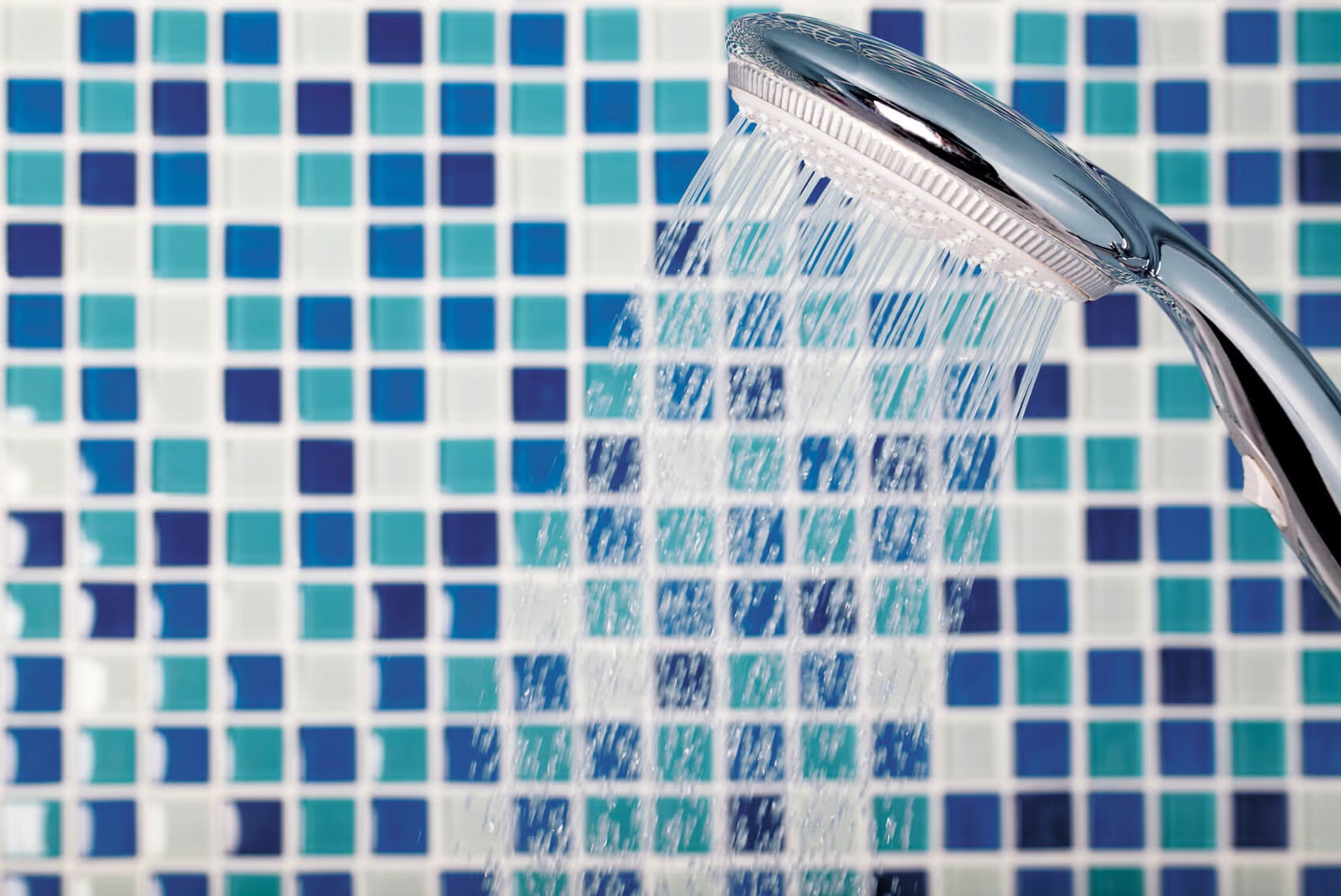
This time of year is when we start battling mold in our bathrooms. Mold loves dark, moist areas and a bathroom is its perfect home. Mold is a living fungus that reproduces when it has enough water and food. Mold is not related to cleanliness but to moisture, therefore even the cleanest bathroom can have an ongoing mold issue.

Some mold is more dangerous than others, but most molds are just growing organisms that damage walls and tile grout. Mold growing on porous drywall is actually using the drywall for food and destroying it in the process.

Bleach will not kill mold. It will change its appearance but the mold will grow back. And, bleach is unhealthy and damaging to the environment. To kill mold you must use an anti-microbial.

tea-tree-oil-anti-microbial

This year, wage a different battle against mold. Use these few simple tricks and a green DIY recipe to keep mold from growing in your bathroom.

  • Run the fan as much as possible – mold can’t grow without moisture. Run your ceiling fan for at least 10 minutes AFTER the steam has disappeared from the bathroom mirror. Moisture stays in the air long after you can see it, so let the fan run the entire time you are getting ready in the morning.
  • Open the window even slightly so you have continual fresh air - Fresh air helps damp surfaces dry faster.
squeegee-shower

  • Use a squeegee to remove water on the shower walls and glass doors - This will not only stop the mold but keep your shower clean. If you squeegee your shower, you’ll almost never have to clean it.
  • Wipe down surfaces with a microfiber cloth – if you wipe down damp surfaces in your shower and sink with a microfiber cloth, everything will dry faster and you will stop mold in its tracks. Make sure to take the damp microfiber cloth out of the bathroom when you are done.
battle-mold-with-microfiber

  • Hang wet towels outside of the bathroom -Wet towels can take up to 24 hours to dry and create unwanted extra moisture.
  • Hang wet bath mats outside of the shower area – Shower mats collect a ton of water. These carpets can take days to completely dry. Hang mats and throw rugs outside so that they can dry completely.
shower-curtain

  • Shake out your shower curtain- Shower curtains are a breeding ground for mold. Moisture gets into the pleats which are perfect a perfect breeding ground for mold. By shaking out the curtain you remove the excess water and help it to dry faster. Remember to keep the curtain completely drawn.
  • Spray this DIY mix daily on dry tile grout and drywall –
    • Vodka or witch hazel
    • 20 drops of tea tree essential oil

Combine ingredients in a spray bottle and spray the mixture on dry tile grout and drywall daily (it's important the grout is dry, so that the mixture will penetrate the grout pores to kill mold beneath the surface). The alcohol in the vodka will evaporate very quickly and the anti-microbial properties of the tea tree oil will work to kill the mold and mold spores in your shower area. This mix is great to use on ceilings too, especially textured ceilings that are difficult to wipe down.

  • Clean your bathroom regularly or hire a cleaning service. Mold needs a food source to survive. It eats dead skin cells trapped in soap scum residue. Eliminating mold requires removing its food source. So a frequent, thorough shower cleaning will go a long way toward reducing your problem long term.

A bathroom is a very hospitable environment for mold, so the battle against it will be ongoing, but with these tips you can be more effective, safely.
Keep Your Closet Beautifully Organized

closet-organization

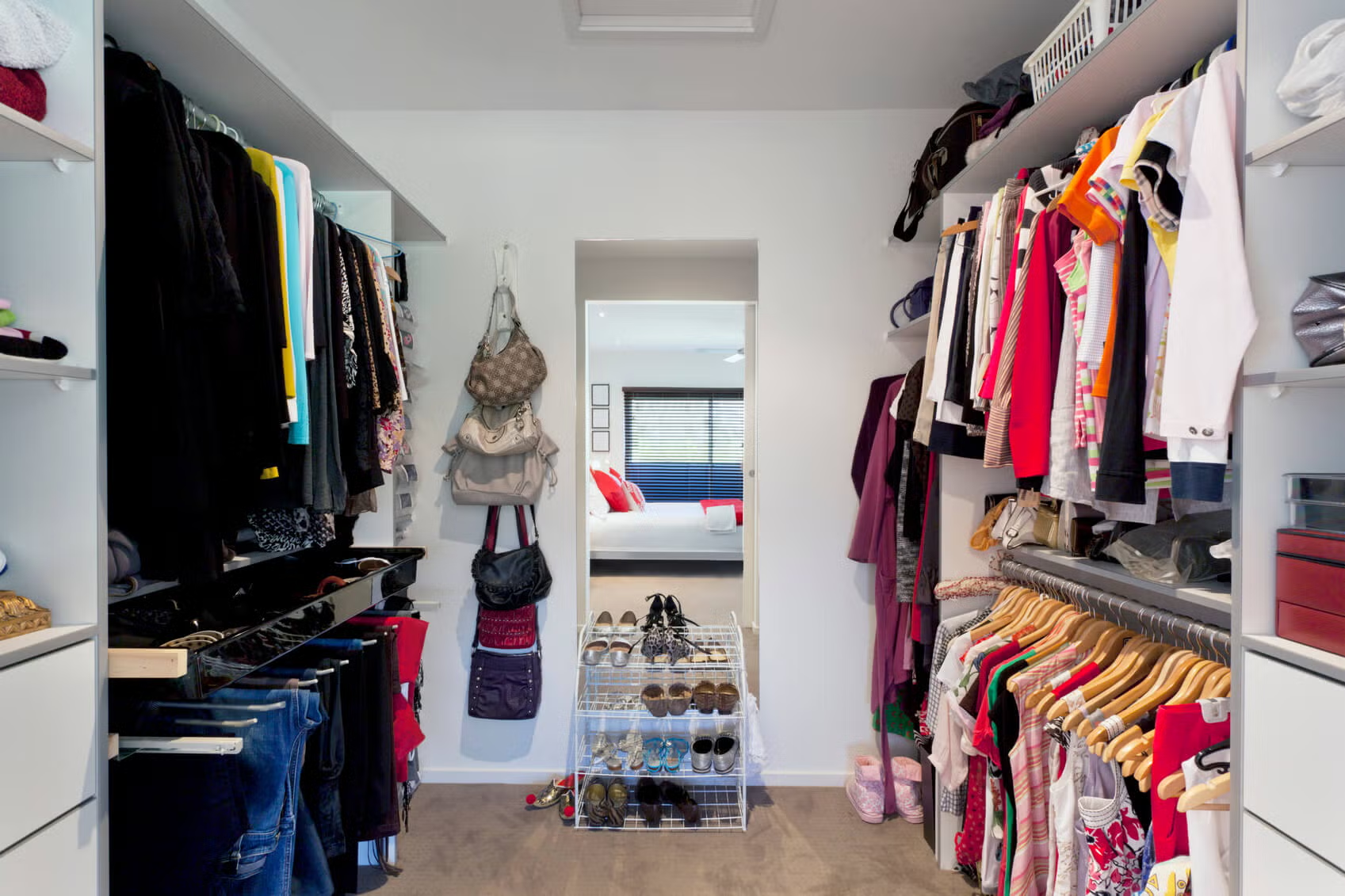
You never know what you have until you clean your closet.

I love a clean closet but I have to admit, I hate cleaning it! Closets are like bedroom dresser drawers in the sense that if you don’t properly put your items away neatly, it quickly turns into an unorganized mess.

Not only do I use my beautiful walk-in bedroom closet for my clothes, but I also use it for storing papers, books, kids school calendars and everything I need in life at the moment. Sometimes I use it for storage, for hiding things like the vacuum, holiday presents, and even my laptop. My closet has always been my number one personal storage space that I can count on to call home for any of my personal items.

I have tried all different ways and techniques to keep my closets neat and I can honestly say that if I don’t go through my clothes, shoes, books, papers, handbags and jackets AT LEAST twice a year, everything quickly builds up.

Here are some clever ways to keep your closet clean that actually work:

When tackling your closet, put each item into one of three piles, the “yes” pile, the “no” pile, or the “not sure” pile. Try and keep the “not sure” pile to a minimum. Ask yourself, “does this item look good on me, do I love this item, is this the image I want to show.” If the answer is “no” to any of those questions, place the item in the “no” pile. Learn to let go of the past and feel good about donating your clothing to those in need.

After the “not sure” pile is completed, pull out all the clothes you are keeping because of sentimental reasons. If you don’t currently wear them but really cannot let go of these items yet, you may want to store them in another area of your home. Try not to keep them in your closet.

Organize all of your items in the closet into sections by color.

For shoes, face one shoe forward and one backwards. Storing your shoes like this gives you more room. You can also see the differences in the height of your heels too!

wooden-hangers

Use the same type of hangers throughout your closet. Everything looks so much neater. I do this in every closet in my home. It makes your clothes look so elegant, and the closet more aligned. Don't want to make the investment in new hangers all at once? Replace them in smaller groups, either by clothing type (pants first, then shirts, skirts, dresses, etc) or buy a new package of hangers each month until you have enough. The dry cleaners will be happy to have the wire hangers back, and a donation center will appreciate the hodgepodge of plastic and clip hangers you've collected over time.

When stacking piles of pants, hoodies, or even sweaters on the top shelf, try using a plastic clothing organizer called Slide N Stax®. It keeps your clothing stacked nicely, even when you are grabbing from the pile! If putting your clothing together by colors doesn’t suit you, try grouping your items a different way. For example, put all blouses together, then all dresses together, and so on. Or, you can group your items according to sleeve or pant length, or season to season. Choose whatever you think will work best for your personality and your lifestyle.

Buying and hanging belt racks around the closet is a huge help! I use belt racks to hang belts, bags, scarves, and ties.

To avoid wearing the same things each day, after the item is cleaned, hang it on the rod in front of all the other items. My husband does this with his suit shirts so he doesn’t wear the same shirts twice in the same work week.

When hanging up your new clothes of the season, place the hangers backwards in the closet. Every time you wear a piece of clothing, hang the item up with the hanger facing front. This way, when the season comes to an end, you will have a better idea of which items you haven’t worn that you may want to donate.

Space Bags are a great way to store items because they take up very little space and they can be easily stored under beds, in closets, or on shelves. For storing winter jackets and snow suits or even bulky bedding, these bags may come in handy! Some people even use these in their suitcases when traveling!

When storing clothes in an area of the basement, add some chalk pieces in cloth bags and pack them with your clothes in the storage bin. Chalk absorbs moisture and will help protect your clothing by keeping it dry.

Before putting all your clothing and other items back in the closet, be sure to clean your closet well. Vacuum with a HEPA filtered vacuum, paying close attention to corners and tops of shelves. Wipe everything down with your favorite homemade green cleaner and a microfiber cloth.

Finally, stand back and admire your beautifully organized closet!


Control Summertime Pests without Chemicals

Summertime heat and humidity brings out all sorts of pests that you don’t want in your home. If you are trying to stay away from toxic chemicals, the last thing you want to use is a toxic pesticide to get rid of them. Here are some natural ways to rid your home from these nasty pests.

There are usually two types of ants we see in our homes. Those big black ones are carpenter ants and then those tiny ones are sugar ants. You can use this simple recipe to get rid of either. Use a  ½ cup of borax and ½ cup of sugar mixed together and sprinkle it anywhere you see the ants. The sugar will attract the ants and the borax will dehydrate them and kill them without poison.

basil-repels-flies

A fly infestation can drive you crazy. Did you know that flies hate the smell of basil? You can use basil plants by windows or place dry basil in muslin bags and tuck it in corners around your home.

Spiders don’t like the smell of citrus so you can mix up a spray bottle of citrus oil and witch hazel and spray it around window screens and window ledges. The citrus smell will keep them outside where they belong.

Ants use trails to remember where they’ve been so use vinegar to wipe away their trails. Just mix up a spray bottle of distilled white vinegar and water and spray the areas where you’ve seen an ant. The acid in the vinegar will destroy the trails and they won’t know how to get back to that spot.

Wasps won’t build a nest where there’s another nest. Wasps are very territorial so all you need to do is build a fake nest to keep the real ones away. You can put a fake one in the front yard and another in the back yard and wasps will leave your yard for a safer place.

Mosquitoes hate catnip and Listerine®. To keep mosquitoes away from decks and patios, just plant some catnip around your other flowers and your garden will work to repel mosquitoes. If you are looking for a safe mosquito spray, just put some Listerine in a spray bottle and spray legs, ankles or any place you’re getting bitten.

salt-controls-fleas

If you have dogs or cats that go outside, you may be dealing with fleas this summer. But something as simple as salt can work to kill the fleas. Fleas take 9 days to complete their hatching cycle so treat your carpets every three days with a sprinkle of salt to keep the fleas away.  You can also place a pan of dish soap and water next to a night light in the evening and they will hop in and drown.

If you deal with dust mite allergies you can use cinnamon sticks under your furniture cushions to repel the dust mites.

Fruit flies are so annoying and can come into your kitchen on fruit from the grocery store or from rotting food in your disposal. Make sure the disposal is cleaned and sealed so the fruit flies can’t keep going into it. Also place your fruit in sealed plastic bags or in the refrigerator to kill the flies. To get rid of the ones you have, fill a container with red wine and a few drops of dish soap. The wine will attract them and they will drown in the soap.

If you are dealing with deer eating your plants or flowers you can deter deer with Irish Spring soap. Just cut some shavings of the bar and place them around the plants or flowers the deer are eating. Once they smell the soap they will be off to your neighbors’ garden.

Seeing signs of mice in your home? Mice don’t like the smell of peppermint so you can repel them by buying some peppermint oil and placing a few drops on cotton balls. Place the cotton balls in the corners of cabinets or corners of rooms where you think they might get into your home.  Reapply the oil every 30 days

Roaches are so disgusting and really difficult to get rid of once you have them. I bet you didn’t know that they don’t like the smell of Tabasco® sauce. So to get rid of those sneaky pests just mix up some Tabasco sauce and water and spray the mixture in corners of your kitchen and bathrooms. The roaches will be on the run once they smell it.

diatomaceous-earth-kills-bedbugs

Bed bug infestations are scary and seem to take a lot of work to get rid of them. A simple treatment of diatomaceous earth can do the trick without any other chemicals. This natural dust has very sharp edges to it and works to “cut” the bedbugs so they die. Then vacuum up the carcasses along with the diatomaceous earth. Place this dust in areas that you suspect have an infestation. Be careful not to use around pets as the dust can aggravate their breathing and get into their eyes.  Another simple solution is to spray the area with rubbing alcohol. Just spray every day to kill off all the bed bugs.

mayo-kills-head-lice

Everyone thinks that lice is a sign of a dirty home but actually lice are parasites that travel from person to person very easily. A simple treatment is to use mayonnaise like a hair conditioner. Put a thick coat of mayonnaise on your hair and wrap in a plastic shower cap. Have a good night’s sleep and when you wake up the lice will be dead. Just rinse your hair and you will have hair with a lovely sheen and will also be lice free!

Green cleaning works on appliances, too!

glass-top-stove-cleanerToday's high-end appliances take expensive specialty cleaners to keep looking brilliant - or DO they? Leslie Reichert has some green cleaning techniques that work just as well, and you probably have them on hand right now.

Cleaning appliances can be a struggle. Since there is a growing number of cleaning products manufactured specifically for each of the different finishes available today, like stainless steel polish, porcelain scrub and even glass-top stove cleaner, you could buy a dozen different products just to clean your appliances! Instead let me show you some DIY ideas for cleaning appliances. With a few simple ingredients and some microfiber cloths, your appliances can be perfectly maintained for just pennies.

glass-top-stove

Cleaning the stove

The stove is one of the hardest appliances to clean. Burnt-on food coupled with spattered grease make cleaning this surface a chore.  If you have a glass-top stove, try using my “green” scrub.  First, use a flat utility blade to scrape off burnt food, taking care not to cut your fingers.  Next, sprinkle the scrub powder onto the glass surface. Using a damp sponge, work in circles until all grease and stains are loosened. Finish by wiping the glass-top clean with a damp microfiber cloth.

Green Scrub Recipe

  • 1 cup baking soda
  • 1 cup table salt
  • 1 cup borax
  • 8 drops pure essential oil for fragrance

Mix well and place in a shaker container

clean-oven-interiorCleaning the oven*

Typical oven cleaners contain toxic chemicals and fumes that are very dangerous – potentially damaging your lungs, your skin and even the food you cook in your freshly cleaned oven.  Even if you rinse the oven really well, there will still be some off-gassing that happens the next few times you use your oven.  Instead, let’s use the power of science to clean your oven. Start by sprinkling some baking soda over the base of the oven. Then fill a spray bottle with distilled white vinegar and lightly spray it over the baking soda. The mixture will start to foam, just like the chemical oven cleaners.  This foam will lift off anything stuck on the oven, without using toxic chemicals. Continue to spray the vinegar onto the baking soda frequently, until the foam has done its work. Soon the mess will wipe right off.

*Do not use this method if you have a self-cleaning oven.

stainless-steel-appliance-cleaner

Stainless steel appliances

There is a daily fight with fingerprints left on stainless steel appliances, in large part because the people putting the fingerprints ON the appliances are not the ones wiping them off! But stainless steel can actually be cleaned very easily. For daily wiping of fingerprints, use a finely woven microfiber cloth – the same type of cloth your eye doctor gives you for cleaning your eye glasses – to keep your stainless steel looking great. To protect stainless steel from fingerprints in the first place, use a light coat of organic olive oil over the entire appliance. The oil will actually work to repel the oils on your fingers. It will keep your stainless steel looking great for a week or more.  After a week, wipe the surface with a microfiber cloth and reapply.

Black appliances

Black appliances look stunning, but just like a black car they show every water spot and piece of dirt. Clean them daily by wiping with a damp, fine woven microfiber cloth. Wipe the entire appliance then let it air dry. The microfiber cloth will remove all dust, dirt and water spots and leave it looking perfect.

granite-counter-cleanerGranite countertops

Nothing is more beautiful in a kitchen than a granite countertop. Light colored granite with lots of veins, always look clean. Dark brown or black granite, however, seems to highlight streaks and smears.  No matter the color avoid typical granite cleaners, which contain oils that make the counters look foggy. Instead, clean the counters and remove bacteria using a spray bottle of hydrogen peroxide. If the counters just need a wipe, use plain water with a dry microfiber cloth to restore the surface to a perfect clean look.

The Three R’s to Garage Organization

The garage – a building or shed for housing a motor vehicle or vehicles. If that’s the textbook definition, how is it that the garage nearly always ends up becoming a home for stuff we are tired of looking at, we don’t have room for, and we’re not even sure we need? It is a “safe spot” for things we know we have to go through but just don’t want to face. The garage is like a time capsule, accumulating evidence of its owner’s interests, professions, and hobbies. It is a place where items go in but never seem to come out. And since mine is a two car garage, finding a seldom used item trapped deep in a corner is an expedition on the magnitude of an archaeological dig!

“Just put it in the garage, I’ll go through it when I have time.”

I cannot begin to tell you how many times I have said that statement throughout my years as a homeowner.

Well, not anymore! Now that summer is over and we’re back to a routine, the time has come to finally tackle this, the biggest area of my home. Because I use my garage for my cars AND for storage, I really need to be on top of my game when it comes to organizing.

But, cleaning the garage sounds worse than it actually is. If you just follow the three “R’s” listed below you will be able to enjoy a clutter-free, organized room that can actually serve its intended purpose. Don’t be afraid to ask family, friends, or even neighbors for help.

Remove

The first step is to remove everything (yes, everything) from the garage. All those mysterious wires, plugs, batteries, sports related items, garden tools, shoes, and boxes should be taken out, assessed, and (mostly) eliminated.

After everything is out, begin separating unused/unwanted items into two piles, the “dumpster pile” and the “donate pile.” Try to get rid of anything that has not been used in the past twelve months. The garage should be a place that reflects the current life of the family that uses it, not a place to store items that you think you may possibly need in the future.

So go ahead, remove those motorized scooters that require chargers and batteries which are not made anymore, manual scooters that are way too small, unicycles, skateboards, plastic toys, helmets, and 7 coolers (how many is too many)? Don’t forget to remove all the “just in case” items that, deep down, you know will never be used!

Rent a dumpster if you plan to get rid of large volumes of stuff.

Rethink

After the sorting is completed, ask yourself what you really want to use your garage for. Parking? Paints? Bicycles? Gardening equipment? Holiday decorations? All of the above?

colored-storage bins

When you decide want this large square footage area is for, divide the garage into different sections, or zones. When each item has a designated area to call home, not only is everything easier to find, but each space has set limits on the amount of items that can fit. That is the key to keeping the volume of “stuff” stored and organized.

To separate zones, use different colored bins, tags, boxes, or even different colored walls. This way each member of the family knows which items go in which zones. For example, for the “blue tool” zone, spray paint the pegboard blue.  Use orange tags on clear bins for the kids sports equipment.

Restore

Time to move the remaining items into their newly designated areas.

Store things according to each items’ frequency of use, placing the least used items at the highest point. Yearbooks, photos and childhood memorabilia can be placed at the top.

peg-board-garage

Frequently used items like tools can be affixed to a piece of pegboard or hung from hooks within easy reach. Hang all saws, gardening tools, brooms, mops, and even outdoor fold up chairs on nails, hooks or more peg board. Use heavy-duty plastic shelving for bins holding frequently used items, like gloves, umbrellas, lightbulbs, and extension cords.

Nothing should be kept on the garage floor. This way the floor is easy to sweep and keep clear of the accumulation of leaves, cobwebs and unwanted bugs. Anything that was once stored in cardboard boxes should now be placed in color coded bins. This keeps things organized and rodents from nesting in your belongings.

tool-hanging-storage-garage

If extra space is needed in certain zones, create a loft, using vertical storage. A sheet of particle board or medium-density fiberboard secured to the rafters is a great way to add much needed storage space.

Never put paint and chemicals down the drain or in the trash. Instead, recycle these items using the app, “iRecycle.” Based on your location, it lists all the collection facilities near you.

Finally, pull those cars into your garage and sit back and enjoy using your beautifully organized, clean, space in the way it was originally intended.


Moving Maid Easy - Packing the Garage

packing-organizing-garageGetting ready to move can be an overwhelming task. Before starting the packing process every room should be cleaned, organized and purged. Actually, you don’t have to do those steps but I strongly encourage you to do them and in that order.

The garage is one of the hardest rooms to clean, organize and pack before a move, but it’s very important to do, even if you having professional movers do your packing and moving. Here are some ideas to help you with cleaning, organizing and packing your garage before your move:

  1. Start by moving your cars and other large equipment like lawn mowers and snow blowers out of the garage. This will give you room to work. While you have those large items out in the driveway, plan to hose them down and let them dry so you won’t be transporting dirt back onto the newly cleaned floor area.
  2. Gather together old cans of paint and other containers of flammable materials and set them aside to take to a recycling center. If you are leaving paint for the next occupants, set those cans aside and label them, DO NOT MOVE. Otherwise, professional movers will pack them along with everything else in the room. Hazardous chemicals should be securely packed, labeled and transported separately; movers will not move hazardous material.
  3. Work on one side of the garage at a time. Move everything from one side of the garage into the other so that you start with a totally clean area. You can use the other side to divide your items into things you want to keep and things that need to be purged.
  4. Once the area is cleared – you can start cleaning it. Start with the ceiling and a straw broom to remove dust and cobwebs. Move down the walls to the floor and sweep all the dirt out of the garage.
  5. Spot wash the garage floor with a mixture of rubbing alcohol and a touch of dish soap. The alcohol will work to break down any oil or grease and the dish soap will lift it up off the floor so you can rinse it away.
    1. Tools – gather all your tools together and organize them by size and function. Remove any duplicates and any in poor condition. Moving a collection of useless rakes and shovels to your new home is a waste of time and money.
    2. Outdoor furniture – make sure all your outdoor furniture is clean and free from mold and mildew before moving it. Use a blower or dust brush to remove the dust and dirt and give it a good scrubbing with diluted 3% hydrogen peroxide if it has mildew spots.
    3. Camping equipment – camping equipment should be cleaned and dried before moving. To let sunlight remove stale  smells hang sleeping bags, tents and other soft goods on a clothes line or spread them out on the grass for a few hours. Store them dry before the move.
    4. Sports equipment – bikes, scooters and skateboards should be stored together before the move. Smaller items like balls and gloves should be placed in plastic containers with lids and labeled on every side.After the first side is clean start moving things back into it - methodically. Use this time to pick and choose what goes with you to your new home.
    5. Hardware – smaller items such as paint brushes, tools and maintenance items should also be placed in plastic bins with lids. Label them with “GARAGE – Maintenance” on all sides so you will know what’s inside. Use clear tubs in the same size for easy stacking and storing and to see what's inside when you get to your new home.

packing-garage-for-move

Traditional two car wooden garage

Healthy living begins now

“I feel fit and healthy.” When was the last time you said that and actually meant it?

No matter how many new year’s resolutions we make concerning our health, we just cannot seem to get it together. We all have good intentions on keeping fit and eating right but unfortunately, unless we make a plan and stick with it, life and all of its “business” tends to get in the way. So I like to take a gut check every few months.

For me, a healthy balance of mind, body and spirit is the ultimate feeling of well-being. Each and every step I take today will result in a stronger, healthier, “me” for years to come.

trail-run

Runner athlete running on forest trail. woman fitness jogging workout wellness concept.

Living a healthier life is just within our reach, all we have to do is educate ourselves on the steps we need to take now that will pave our way for a healthier living tomorrow. Here are some tips to get us started on the well-being trail of life:

First things first – Evaluate your health and where you currently stand. This is the “preparation” stage and may require a little work. In order to move forward on the health track, we need to find out where we stand right now. Make appointments with your doctors and dentist for a complete check-up. Make sure all immunizations are up to date. Write down all questions you may have for the doctors and bring this and your current medications list with you.

Evaluate your physical activity. Be honest with yourself. How much physical activity do you get weekly? Is it working for you? What about the food you eat? Try and keep a food journal for a few days so you can get a good look at the kind of food and beverages you are actually consuming.

How about your energy? Are you sleeping enough? How has your mood been? Do you feel anxious, stressed, or depressed? Take a look at your connections with family and friends. Are they strong, supportive connections? Do your spiritual and/or social groups enrich your life?

Taking a good look at yourself and how you are today is a major step in setting goals towards your health and well-being. Don’t be afraid to dig deep and be honest. This is the time to do it.

Secondly, take a look at your habits. Whether it is smoking, alcohol, drug, or any other kind of addiction, now is the time to partner with your doctor and discuss treatment options. Chronic health issues, like heart disease, depression, or diabetes, that you may currently be dealing with, also requires a call to your doctor. Remember, educating yourself on where you stand today will bring you one step closer to what you can handle in the future.

Next, move it! Get physical but make it fun! Take a two mile walk every morning or evening. Go for a hike or bike ride. Take a cycling, swimming, or yoga class. Whatever you decide to do, make sure it keeps your interest so you don’t give up. Schedule exercise days on your calendar so you remember how important this is to your final goal of wellness. Set weekly goals that you know you can keep. Make exercising more fun by bringing along a buddy, creating your own routines, or trying to beat your own goal of “most steps walked per day” (hint: 10,000 steps is recommended each day).

strawberry-salad

Since you added physical fitness to your life, the next step is to upgrade your diet. In other words, be aware of what you are eating and make the right choices of what to eat. Take the “should” out of your vocabulary and replace it with “choose.” “I choose to eat more fruits and vegetables,” sounds much more positive than “I should eat more fruits and vegetables.” Keep the guilt out of the kitchen by stocking the cabinets with healthy food, snacks, and beverages. While eating, sit down and enjoy your meals. Hold off on the multitasking until after you eat. Relaxing and enjoying your meals helps you feel satisfied. Try and incorporate a rainbow of fruits and veggies into your daily meals (5 servings or more is a good number to start with).

Learn how to handle stress. For long-term stress, know where your baseline stress level is and develop coping skills to keep that baseline level in check. Meditation, yoga, exercise, and deep breathing exercises can help. When dealing with a stressful situation that has come up without warning, take a step back from the situation, re-group by practicing deep breathing techniques, and if needed, take a short walk. Re-gain and focus by asking yourself why you feel so worked up.

yoga-for-health

Sleep longer and better. Sleep time is when the body heals itself. Avoid alcohol or caffeinated beverages close to bedtime. Also avoid vigorous activity close to your bedtime. Chamomile tea and a hot bath will help “mentally” relax those that have trouble sleeping. Skip napping during the day if you have trouble sleeping at night. Sleep time is just as important as diet and exercise.

Include some brain teasers into your life and challenge your mind. Watch game shows on television, play board games with friends and family, or try and complete a daily crossword puzzle. The more mentally stimulating activities you do can reduce your likeliness of developing dementia.

Remember the road to wellness begins with the choices you make in your life.


Maid Brigade welcomes the Green Cleaning Coach

We've collaborated in the past with Leslie Reichert, the Green Cleaning Coach, to create content and videos for fans of DIY house cleaning to leave your home not only cleaner but safer. Now, Maid Brigade is proud to officially welcome Leslie Reichert to our blogging community. Leslie is a cleaning expert who uses her sparkling personality, great sense of humor and contagious passion to engage her fans and followers. Leslie realized her life mission after reading a quote that said that older women are called to “teach and encourage the younger women on how to love their husbands, love their children and to be pure keepers of the home… “

Leslie-ReichertLeslie says, “The joke was on me that I was no longer the younger woman, but the older one, who was being called to share my life experiences with others.”  She now divides her time between coaching individuals and speaking around the country. Her goal is to let people know that there are alternatives to toxic cleaners, most of which are already in your pantry. Her goal is to re-program people to go to the pantry first, instead of under the kitchen sink, when looking for a cleaner. And that is why we’ve asked her to come on board – to share her green cleaning tips so you can keep your home cleaner and safer until Maid Brigade comes to clean!

Leslie is known as a Green Cleaning Coach…

Leslie is an author, spokesperson and is a teacher of green home-keeping. She has been on the Dr. Oz Show, as well as a contributor for Real Simple, the Today Show and Woman’s Day Magazine. She is a frequent home-keeping expert on Martha Stewart Living Radio and author of the book: The Joy of Green Cleaning a handbook for DIY cleaners, including a collection of 101 homemade recipes that have been tested and proven to work as well as “store-bought” cleaners. The cornerstone recipe in her book is ‘Great Grandma’s Laundry Soap’ which is derived from her great-grandmothers laundry soap recipe. After testing the laundry soap, Leslie knew this and other old-fashioned recipes needed to be compiled into a convenient resource. Her mantra has now become: “We can change the world – one spray bottle at a time.”

Speaking of change - read her first blog for Maid Brigade - if a cleaning technique could change your life, this would be it: Bucket-less Mopping.

DIY Green Cleaning: Bucket-less Mopping

Washing the kitchen floor is one of the most time consuming chores you have on your cleaning list. Having to pull out a bucket and a mop means that you’ve got at least a half an hour of cleaning ahead of you. What if I showed you a faster and easier way to clean your kitchen floor? It’s a simple system that will leave your floors looking like you washed them by HAND! I call this system bucket-less mopping.  You won’t have to use a bucket or stinky mop to wash the floor. Instead, you mix up your cleaner in a spray bottle and the bottle becomes your bucket. You’ll use less water and just a fraction of the cleaner you would normally use in a bucket AND it makes cleaning your kitchen floor so fast, you may actually want to do it more often.

Bucket-less Video Thumbnail

Here’s how it works:

Use a 16 ounce spray bottle.

Put a few drops of your favorite floor cleaner in the bottom of the bottle

Add enough water to fill it to the top.

Insert your spray nozzle into the mixture and shake.

This spray bottle is now your bucket. You have mixed your cleaner to the same water:cleaner ratio as if you were using a two gallon bucket.  It’s amazing how much water and cleaner you are saving.

mop and mop-head

And here’s the bigger secret. You’ll want to purchase a microfiber mop with removable – washable mop heads. These mop heads will clean the floor without spreading dirt. You will need two to three removable mop covers to clean your kitchen floor, depending on the size of your floor.  I have an average size kitchen and I use three covers. I could get away with two, but I like to make sure that the floor is getting really clean, so I change them often while I’m washing it.

Place all the mop head covers in the sink and cover them with plain hot water. Take the first cover and squeeze out all the excess water. You want the mop head to be damp, not wet. Put the damp cover on the end of the mop and start at the farthest corner of the kitchen. Spritz you cleaning mixture on to a small area and then wipe it with the mop. Continue to mop the floor until you feel like the mop head is getting dirty. Remove it from the end of the mop and put it directly into the washing machine. Grab another clean damp mop head and place it on the end of the mop. By doing this you are preventing cross contamination. When you rinse your sponge mop in a bucket of dirty water, you are spreading the dirt and germs back onto the floor. Bucket-less mopping prevents cross contamination.  Continue washing the floor is small segments – changing the mop cover whenever you feel it’s necessary. The other great thing about this system is that the floor will dry very quickly so you will be able to walk on it right away. This system is also great for hard wood floors since you are only using a damp cover. It’s perfect because you are only using a little bit of water which won’t do any damage to the wood floor.

Give this bucket-less mopping system a try. You will be amazed at how easy it is to wash your floors. It may be so easy that you’ll try doing it more often!

Watch the video!


5 Tips to Get You Through an Earlier Allergy Season

It seems as though our unseasonably warm winter has brought early spring blooms and pollen. [You didn’t think we could sail through an unseasonably warm winter without a catch now, did you?!]

More than 40 million Americans (my three children and myself included) have already begun wiping our watery eyes and blowing our sneezy noses because allergy season hit us a little earlier this year.

According to experts, a warm winter and a warm spring affects a plant's timing for pollen production: the warmer the weather, the earlier the pollinating season. Studies of recent years have shown milder winters nationwide, which meant tree pollen and spring allergies have been arriving earlier than usual. Many allergy and immunology experts think that allergies in general are increasing throughout the westernized world. They believe that global warming and CO2 levels in the air, pollen seasons are lengthened and more severe.

Despite the earlier allergy season that is now upon us, there are things we allergy sufferers can to do make our spring season happier and our allergy season tolerable.

Stock up. If you know you suffer from spring allergies, you may want to arm yourself with the antihistamine or nasal spray that works best for you. Common over-the-counter allergy pills are Allegra, Zyrtec and Claritin. Zyrtec may make you drowsy, so use only at bedtime. Allegra and Claritin are not sedating, and can be used throughout the day. Claritin, Allegra, and Zyrtec are recommended over Benadryl as an antihistamine because they seem to be more effective, with fewer side effects.

If an over-the counter antihistamine is not enough, try adding a nasal spray like Rhinocort, Nasacort, or Flonase, all of which provide great relief throughout the day. The nasal sprays help itchy, watery eyes, headaches, and sinus congestion. My children and I cannot get through the spring season without our Nasacort!

Because the early days of spring allergy season can be very difficult for people with asthma, it may be time to meet with your doctor and begin using any of the prescribed doctor-recommended drugs and sprays before the pollen season gets into full swing and your allergy symptoms begin.

If you're not someone who typically has seasonal allergies but seem to have come down with itchy eyes, clogged ears and a runny nose this year, it may be worth paying a visit to your primary care physician or allergist.

Longtime allergy sufferers who do not experience relief from over-the-counter drugs may want to consider allergy shots or immunotherapy pills, both work the same way and seem to be equally as effective. The pill, however, only works on grass and ragweed pollen allergies.

Schedule your day. Pollen levels are highest in the morning, so if you like to run or exercise outdoors, it may be best to plan that activity for the early evening. Educate yourself about pollen counts in your area by looking online or watching your local weather forecast. Try not to spend a lot of time outside when pollen counts are at a high. Avoid outside exercise on high pollen count days. If you must spend time outdoors, choose the afternoon if possible. During the warmer months, pollen counts tend to be highest between 5:00 a.m. and 10:00 a.m. Pollen counts tend to be the lowest right after heavy rains.Avoiding pollens completely is very hard to do because tree pollen can be blown as far as fifty miles away.

Keep pollen outdoors as much as you can. Before heading indoors, remove all outer clothing such as jackets, hats and shoes at the door, so you don't track pollen into your living room and bedroom. People with severe pollen allergies may want to consider showering before getting into bed to remove pollen. Avoid hanging garments outside to air dry.

Wash your hands! Washing your hands often will keep pollen and germs at bay. Avoid touching your face, especially your eyes, in case your hands have pollen residue on them.

If possible, stay inside. Avoid the outdoor pollen by staying inside as much as you can, or at least when the pollen count is at its peak for the day.

If you are lucky enough to only have a tree pollen allergy, your symptoms should start to subside by June. However, June is when grass pollen allergies usually begin, then comes mold and spores in July. The end of summer mostly brings ragweed allergies.

Remember, allergies left untreated can lead to more serious health issues, like allergic rhinitis, asthma, or chronic sinus infections. Take care of your allergies and your health!

Want more info? Check out this infographic (our #1 re-pin right now - go figure!) on Pinterest!

7 Key Clutter Scenarios and How to Cure Them

shoe-clutter

As with life, clutter happens. Drawer by drawer, room by room, inside and outside, hidden or visible, clutter begins to creep up and expand right before our very own eyes. The good news is we can actually learn to control the clutter before it takes over our homes by getting down to the root of the problem – ourselves.

According to Maid Brigade's consumer research, a disorganized, messy home can cause personal discomfort, anxiety and depression. Clutter creates safety hazards, too. And it creates more surface area to collect dust, dust mites, pollen, pet dander and other allergy and asthma triggers - a big deal especially this time of year. So....controlling clutter can help improve quality of life.

But before we even begin to lessen our stress by de-cluttering, we need to understand exactly why we clutter in the first place. Is it a personality "quirk" or is it triggered by certain events, people, emotions or other stimuli? Or do we just have too much stuff? Or is it a result of over-committing in work, the community, church, children's schools, or other areas? Very few people actually enjoy straightening and cleaning, so we become very adept at making other things - anything - a higher priority.

Before trying to tackle clutter, taking an inward look can help understand the root of the problem. And this understanding may lead to a permanent solution. In addition to understanding, you need techniques to control, contain and clear out clutter.

Here are 7 common clutter scenarios and tips to get past them:

  1. Piles. Many people who are not even sure what clutter is. This is why a problem goes unnoticed until the situation is way out of hand. When valuable or cherished items start turning into “piles of stuff”, the cluttering process has begun. Find a place to store these items together, out of the way - in a drawer, cabinet, cubby or closet.
  2. Collections.  The items we cannot let go of, the sentimental items that bring us joy, we become emotionally attached to. but how long is it appropriate to hold onto items? When should we know it’s time to start donating, selling, tossing, or keeping them? A good rule of thumb is to visit these collections once a year (if you don't, do you really need to keep them???) to both enjoy them and ask yourself, "Is it time to say goodbye to this item and keep its memory in my heart?" Be honest.  Letting sentimental items go, or storing them properly, is a big part of the de-cluttering process.
  3. Spatially challenged. The question, “how long should I hold on to something?” goes hand in hand with, “how do I store things the correct way?” Not knowing how to store your items properly always ends up as clutter. Search online for products that can help you organize clothes, shoes, craft supplies, work tools, magazines and more. Looking at the product shots will help you improvise solutions that can work, even if you don't buy the products.
  4. No routine. Without set routines for cleaning, storing and organizing, the house and everything in it will quickly become a complete mess. Learning to de-clutter one drawer a day, or fifteen minutes each day, or any set practice can help establish a routine that will help tremendously with clutter control.
  5. Container aversion. Sometimes people prefer not use storage containers because they tend to be expensive and can at times cause more clutter. If this is the case, try using small boxes, jars, trays, Ziploc bags, hooks or baskets to store smaller items such as remotes, mail, nail polishes or rubber bands.
  6. Micro clutter. Your clutter is always the same types of items. As crazy as it sounds, some people tend to clutter up the same specific areas of their home but be neat in others. For example, the kitchen cabinets might be spotless and organized to the max, but the pantry is a disaster. Or, the dresser drawers are neat and organized but the closet is a mess. If this is you, find a way to dial this area into your routine, then stick to the program. The good news is, because this is isolated clutter, it won't take long to address if you do it often.
  7. Abundance. Buying more then you need is a biggie and it comes in all forms. People go on shopping sprees and buy clearance items, not because they need them but because they are on sale. Others will buy items because they are “cute” but will never use them. Some of us even buy the latest and greatest items and only use them once. Then there are the “dream” buyers, who sign up for yoga, cooking, or painting classes, buy all the equipment, and never go back to class. Be smart and think before you buy! Or adopt the one-in-one-out rule: if you buy something new, something else must be donated, recycled or handed down.

If clutter is a problem for you, take some time for introspection, then use the scenarios and tips above to help you get clutter under control, once and for all. With the clutter, away will go anxiety, depression and poor quality of life. Although it may not be enjoyable, de-cluttering has very important benefits. You'll see - even small accomplishments will have a positive results, making it easier to achieve more. Just like in life.


Top 10 Stains of the Season and Cleaning Tips to Remove Them

Lipstick-on-collar---CropValentine’s Day has come and gone, and as we finish up our last bit of yummy chocolate and enjoy our beautiful bouquet of roses, we are left with beautiful memories and a variety of stains. Maid Brigade to the rescue, with some handy cleaning tips to help remove these stains.

If you choose to remove stains naturally, without using any harsh chemicals at all, you may want to stock up on white vinegar, hydrogen peroxide, lemon juice, baking soda, and liquid dish soap or Fels Naptha soap. These ingredients are not only cheaper to buy than standard household cleaners, they have also been proven to work again and again.

Here are a few types of stains we have all tried to conquer sometime or another, followed by easy cleaning tips to combat those stains once and for all:

  1. Chocolate. Blot off excess chocolate. With a small eye dropper, apply diluted white vinegar to the stain. Rinse the spot with cold water.
  2. Coffee and Tea. Make a paste of baking soda and hydrogen peroxide. Scrub onto stain with a small toothbrush. Rinse.
  3. Red Wine. Pour a mix of liquid dish soap, hydrogen peroxide, and cold water onto stain. Blot. Rinse. For stains on upholstery, blot stain with a microfiber cloth to gather up excess liquid. Pour a little white wine or club soda on the stain. Blot dry.
  4. Flower Pollen. Never rub pollen with a cloth or with your hand. This only pushes the pollen into the fabric more. If the pollen seems to be only on the surface, it can still be removed easily. Shake out clothing to remove as much pollen as possible. Alternatively, you can use a piece of tape and gently lift up as much of the pollen as possible with the sticky side of the tape. Gently, rinse stained area with cold water from the back of the clothing. Next soak stained garment for 30 minutes in an enzymatic detergent mixed in cold water. Launder as usual.
  5. Pen Ink. Rubbing alcohol is great for removing ink from clothing. Just remember to let the alcohol set for about half an hour. If rubbing alcohol doesn’t work, try denatured alcohol.
  6. Permanent Magic Marker. If the marker reads permanent, it is just that – permanent! You can try dabbing some concentrated orange cleaner on the stain, letting it sit overnight. The next day, rinse the garment. To lighten marker stains, brush some toothpaste on the stain.
  7. Lipstick. Rub castile or Fels Naptha soap into the stain and let it sit overnight. The next morning, wash as usual.
  8. Underarm stains. The stain is actually wax from deodorant. So place a white paper towel both on top of the shirt and on the ironing board to protect the ironing board. Set your iron to medium heat and iron the area. The wax melts into the paper towel and the stain disappears (See general cleaning tips, below, about heat and stains. If the garment has been laundered before the stain was removed, you will not be able to fully remove the stain.)
  9. Pet accidents and odors. If you are an animal lover, then you should keep Nature’s Miracle (enzyme) nearby! Pour enough enzyme product on the spot to saturate the padding. Then rinse with a ½ cup white vinegar per quart of water then again with plain water. Vinegar also helps neutralize odors.
  10. Candle wax on carpet. If candle wax has dripped onto your carpet, let the wax cool before attempting to remove it. Once the wax has hardened, take a dull knife and scrape away all the excess wax that you can. Remove stubborn wax droppings by covering them with a paper bag and iron on medium heat, pressing the bag down gently. The remaining wax will be transferred off your carpet and on to the paper bag.

spilled-red-wine

General cleaning tips for removing stains:

  • Give your product time to work. Dab on your cleaner and give the product time to dissolve the residue eliminating all the rubbing and scrubbing.
  • Try and remove the stain as soon as you can. The longer a spill sets the worse the stain.
  • Rinse the cleaner out of fabrics and carpeting by dabbing on a mixture of 2 cups water and ¼ cup white vinegar, then repeating with plain water.
  • Heat sets stains. So avoid the use of hot water to remove stains and definitely don't put stained garments in the dryer until you have removed the stain.
  • Be sure to place a clean white cloth under the fabric you are removing the stain from, in order to prevent the stain from spreading to another surface.

Holidays and special occasions may come and go, but stains can live forever, unless we clean them properly.

Hopefully these cleaning tips will help you look forward to holidays, armed with the knowledge you need to eliminate pesky stains that often come with the celebration.