

Category: Healthy Home

The Dog Days of Summer...

The dog days of summer are here!  Hot sultry weather, delicious barbecues, and long beautiful summer nights.  I just love it....and so does my dog!

For all those dog lovers out there, here are some ways to keep your pet staying happy, healthy and safe all summer long...

It is very important to keep your dog hydrated and the dogs water bowls filled.  If your dog stays outside, make sure there is a bowl of water and some shady spots for him to sit and cool off.

Since dogs cannot take off layers of fur like we do clothes when we are hot, if you are planning any dog walks (or jogs) around the neighborhood,  try and do them in the early morning or evening hours when the temperature is low.  Dogs can suffer from heatstroke so don't overdo it on those hot days.

Protect your dogs paws by letting them walk on the cool cement or grass when walking them.  The streets are just as hot on their feet as they are on our own.

Get out that sunblock because believe it or not, some short haired dogs and light-haired dogs can get sunburn!  Lather on some all-natural, fragrance-free sunscreen on you and then apply some to the dogs nose, tips of ears, and around their mouth.

Make sure your dog has the proper ID tags if taking them to the park or on a walk.  This way you will never lose your furry friend.

Always bring water for your pet, especially on those long walks or jogs...your dog NEEDS TO STAY HYDRATED!  Pet stores and most department stores carry fold up water bowls that you can take with you wherever your pet goes.

Never leave your dog in a car if the weather is warm, and especially not if it’s hot! Cracking the windows makes no difference in the temperature gain. It doesn’t take high temperatures for it to be dangerous. A car parked in the shade can reach dangerous temperatures on a hot day.  If the car is on the sun, the temperature can quickly rise up to 160°F. Even at a mild 72°F, the inside of a car can reach 116°F in an hour...plenty hot to kill a dog.  Please, if you are out running errands, the safest place for your dog is at home.

Dogs can’t sweat—they control their body temperature by panting. If the air in the car is near or above the dog’s body temperature (about 100°F), the dog will be unable to cool itself, and its body temperature can quickly rise to fatal levels (over 107°F). Symptoms of heatstroke to look for in your dog are rapid heart beat, lethargy, vomiting, heavy panting, salivation, disorientation, agitation, seizures, coma and death.

Show your pet how much you love them by keeping them happy and healthy all summer long!
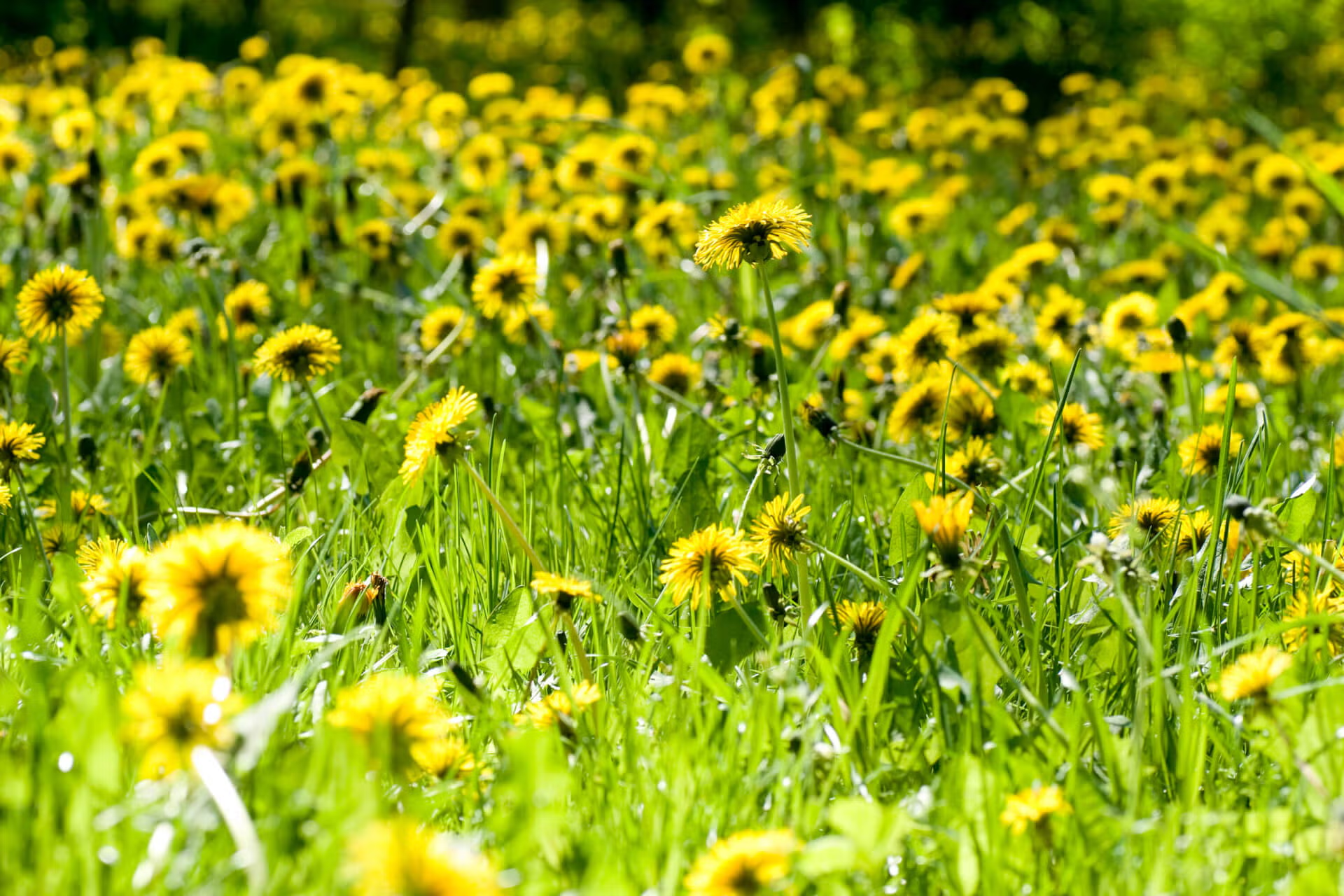
To Weed or Not to Weed...

To weed or not to weed.  That is what I say to myself at least once a week!  And after working, going to school and taking care of the kids, the last thing I feel like doing is weeding! 

Well good news... I have found some easier ways to get rid of dandelions and weeds from your lawn that I would like to share with you:

Pouring hot water over any weed that you want to kill will work.  The weeds essentially die.  You can also try pouring lemon juice on them too.  I never tried the lemon juice idea but I heard it works.

Sprinkle a handful of baking soda onto concrete and  sweep it into the cracks of the paved patios and walkways.  The sodium helps the weeds die.  Borax can also be used, and Borax helps keep ants away.  The downside of Borax though is that is can kill other plants so be careful where you use it.

Remove dandelion heads while they are still yellow flowers.  If you prevent them from getting to the germination phase you can stop most of them from growing and spreading.

Lastly, pouring white vinegar over your weeds also helps because the acidic liquid should help kill them.  Some people have tried house vinegar that is 5 to 10% acidic and have gotten good results.  There is a vinegar called "Burnout" that is made just for gardeners that will kill weeeds the non-toxic way.  Burnout is supposedly 15 to 25% acetic.  If anyone has ever tried Burnout, I would love to hear about the results!

Giving Back To Our Environment

This past weekend, my son had an opportunity to play baseball at a charity tournament for kids.  As I sat there watching the game, I thought how nice it is to be able to give back to those in need.  What a great feeling it is to know that you are doing something to help others. 

I then looked over at the garbage pail near the field and saw that it was overflowing with plastic water bottles and aluminum cans.  I started thinking about recycling, and how it helps our environment.  People still don't realize how every small step counts, and when it comes to recycling, we all need to do our part.  I feel "we" are on the right track, but more has to be done.  It is our time to start giving back to the environment!

I decided to look up some interesting facts about recycling to remind myself why recycling is so important.  I would like to share them with you:

~ Recycling helps slow down the process of global warming.

~ Recycling is great for the earth.  Fewer trees are cut down when we recycle paper.

~ Recycling reduces the amount of waste in landfills, creating a cleaner, more spacious environment.

~A used aluminum can is recycled and back on the grocery shelf as a new can in as little as 60 days.

~ More than 20,000,000 Hershey's kisses are wrapped each day, using 133 square miles of aluminum foil.  Most of us don't realize this but that foil is recyclable.

~ Every ton of recycled office paper saves 300 gallons of oil.

~ Americans throw away 44 million newspapers everyday.  That's the same as dumping 500,000 trees into landfills each week.

~ Recycling one aluminum can saves enough energy to keep a 100 watt bulb burning for 4 hours.

~ Each year Americans throw away 250,000,000 styrofoam cups.  Styrofoam is not recyclable.

~ Americans use over 80,000,000,000 aluminum cans every year.  There is no limit to the amount of times aluminum can be recycled.

~ Plastic bags and other plastic garbage thrown into the oceans kills as many as 1,000,000 sea creatures every year.

~ Every year, each American throws out about 1,200 pounds of organic garbage that can be composted.

~ To produce each week's Sunday newspaper, 500,000 trees must be cut down.

~ Each of us uses approximately one 100 foot tall Douglas Fir in paper and wood products per year.

~ Every minute of everyday, an average of 113,204 aluminum cans are recycled.

~ Recycling provides jobs and preserves our natural resources such as oil.  It also keeps our water clean.

~ Letting your faucet run for 5 minutes uses as much energy as using a 60 watt lightbulb for 14 hours.

~ A typical family consumes 182 gallons of soda, 29 gallons of juice, 104 gallons of milk, and 26 gallons of bottled water a year....Don't forget to recycle!

Keeping A Healthy Beautiful Lawn

For the past few years I have spent countless hours trying to make my lawn look beautiful and I think all the hard work has finally paid off! 

Here are some eco-friendly tips that I follow to keep my lawn lush and green during the beautiful warm weather season:

Believe it or not, I use electric tools when tending to my lawn and landscaping.  I save alot of money this way because I don't have to buy gas for my equipment. 

Through trial and error, I realized that the correct mowing height of a lawn is probably one of the most important steps in maintaining a healthy lawn. Your lawn mower blade should take only about one third of the length of the grass off each time you mow.

As we all know, watering a lawn helps grass grow deeper roots and helps prevent drought.  Watering your lawn early in the morning seems to be the best time to water so less moisture evaporates throughout hot days.

Pesticides are all very toxic to some degree which is why I stay clear away from them.  Pesticides can harm pets and children, and can interfere with the ecological balance in our yards by killing off  worms, which are needed.

Learn to compost your grass clippings.  The Environmental Protection Agency showed in 2011 that 27 percent of landfills were filled with grass clippings and waste from yards.  Composting your grass clippings can reduce this number tremendously. 

Do you have any tips on how to keep your lawn looking beautiful?  Share them with us! 


A Clean House Is A Happy House

Is clutter invading your home and making you feel overwhelmed?  Does clutter somehow get into your home before you even realize it?  If your answer is yes, then follow some of these ideas to get a hold of clutter before it takes over:

Find a system that works and stick with it:  I know it is not easy at times, but it helps.  Having a specific spot for everything helps avoid potential messes.  Organize paperwork in filing boxes, put toys in bins, keep magazines in baskets...whatever works to minimize clutter is what you should stick with.

Spot clean everyday for about fifteen minutes.  Return items to their proper places.  Try and go room to room and spot clean each day to help keep your home in order and your stress level low.

Learn to purge seasonally.  Get into the habit of purging at the end of each season.  Go through clothing and household items and see what you can get rid of.  Donate your goods to your local charities.

Get the family involved.  Have your family pitch in around the house.  Folding the laundry, sweeping the floor, or washing the dishes are all easy jobs that children can do to help keep the home mess free. 

 Got space?  Avoid taking up precious space in your home with things that you never use.  Save your valuable space for those things that have lots of meaning, or that serve a great purpose.


Maid Brigade House Cleaning Services cares about the health of you and your family. For more information on healthy green living and green cleaning, please log on to https://greencleancertified.com and https://maidbrigade.com. To learn more about the asthma and allergy triggers in your home, or to learn more about household products and breast cancer, please log on to https://www.greencleancertified.com/greentv.


Keeping Indoor Air Healthy With Plants

According to the Environmental Protection Agency, indoor air can contain up to ten times more pollution that the air outside due to toxic emissions from airborne mold, viruses, and other pollutants. Since Americans spend most of their time indoors, especially during the winter months, this can be an unhealthy situation for most of us.

Improved air quality contributes to overall health and can improve productivity. A very simple way to improve indoor health is by placing plants around your home. Plants naturally clean the air of toxins and chemicals.

To reduce toxins, try placing these plants around your home:

Kentia Palm plants reduce Volatile Organic Compounds (VOCs) levels in the air. Volatile Organic Compounds are toxins that are released from household items such as toxic household cleaners and paints.

Janet Craig plants take in oxygen, carbon dioxide, and also VOCs.

A small table-size plant called Peace Lily (Sweet Chico) also reduces VOCs. Peace lilies grow well in moist, humid environments. Keeping a peace lily growing in the bathroom can help reduce the amount of mold in the bathroom.

Plants usually take in carbon dioxide and release oxygen. The cycle slows down during the night. Gerbera daisies release their oxygen at night. For those with sleep apnea or breathing disorders, increasing the amount of oxygen in the room can help them achieve deeper and more restful sleep.

Spider plants remove toxins from the air and keep it cleaner and more breathable. A study done by NASA showed that spider plants are very effective at removing pollutants from the air within a matter of days.

Believe it or not, English ivy plants reduce the amount of benzene from books and papers. Benzene can interfere with focus, study, and work. Reducing benzene is a great way to help students keep on top of their schoolwork.

When exposed to dry air, Boston ferns release moisture and act as natural humidifiers. Placing a few Boston ferns in a dry area of the house can help keep it moist. These plants are especially beneficial in winter, when the dry air can cause skin and lips to crack.

Maid Brigade House Cleaning Services cares about the health of you and your family. For more information on healthy green living and green cleaning, please log on to https://greencleancertified.com and https://maidbrigade.com. To learn more about the asthma and allergy triggers in your home, or to learn more about household products and breast cancer, please log on to https://www.greencleancertified.com/greentv.

Source:

www.NASA.gov

www.epa.gov

www.wolvertonenvironmental.com/air.htm

Hello Spring...Good-Bye Ants!

Spring is here, and so are the ants! For some of us, ant season may be year round. Instead of using expensive pesticides that are filled with toxic chemicals, why not go green?

First, clean up any scrap food or garbage that may be lying around. This way the ants won't have a food source to go to .

Sprinkle salt, basil, pepper (red or black) or cinnamon along the areas that ants flock to in your home. Don't forget to sprinkle along doorways and window sills. You can also place bay leaves in cabinets to get rid of ants. The Bay leaves also help keep cockroaches away.

Ants also do not like mint, cayenne pepper, chili powder, or coffee grounds. You can sprinkle any of these items along the pathway of the ants.

If you have an area in your home that is difficult to sprinkle the above ingredients around, try using a liquid solution to get rid of the ants instead. Place equal amounts of apple cider vinegar and water in a spray bottle and spray wherever you see ants. Peppermint oil can also be used.

Wipe down the counters, walls, doorways and floors with a mixture of half vinegar and half water. The strong smell should repel the ants.

Try placing cucumber peels in the areas that you see ants the most. Cucumber peels are toxic to the types of fungi ants feed on, and are avoided by ants. This is a good deterrent before ants become a problem so use this solution at the beginning of ant season. Change the cucumber peel often.

Maid Brigade House Cleaning Services cares about the health of you and your family. For more information on healthy green living and green cleaning, please log on to https://greencleancertified.com and https://maidbrigade.com. To learn more about the asthma and allergy triggers in your home, or to learn more about household products and breast cancer, please log on to https://www.greencleancertified.com/greentv.

The reason I use Maid Brigade

The following is a letter we received from Cindy F. in Houston sharing the story of her vintage diamond, its remarkable rescue and the reason she is a Maid Brigade customer...


"Back in February I went to bed on a Wednesday night and found the back of a screw-on diamond earring laying in my bed. The earring was nowhere to be found…We launched an exhaustive search but never found the earring. When Maid Brigade came the following Tuesday, I told Patty and SHE went on the search. She checked her vacuum cleaner every time she heard a strange noise, she looked in every corner and tore that bed to pieces! 

I never stopped looking. The earring was an old-world cut diamond. An antique, over 100 years old, that was irreplaceable.

Almost six weeks later, Patty saw something sparkle in the shower drain. She used the light in her phone to look into the drain and there it was, the lost earring! She went through drawers until she found a small pair of manicure scissors that would fit into the drain and very, very carefully managed to get hold of the earring and pull it out. She never stopped looking for that earring! You should have seen the excitement on her face when she brought me that tiny little diamond. She was as excited as I was.

This is the reason I use and have continued to use Maid Brigade. There is an attention to detail I have never seen anywhere else. Every week she asked about that earring and every week when I told her I hadn't found it, Patty went through my house with that same fine-toothed comb like she did the first time I told her about it. She never stopped looking. That earring was as important to her as it was to me. She is the very best of the best!"


Lessen Allergy Triggers In Your Home

Carpeting can make our homes look warmer and more inviting.  It is soft enough for babies to walk on, it reduces noise levels, and it is more cost-effective than stone, tile, or wood flooring.

Carpet provides the healthful role of filtering the air.  Carpet acts like a trap, keeping dust and allergens out of the air we breathe.  Basically, what falls to the carpet tends to stay trapped in the carpet until it is removed through vacuuming.  

Unlike smooth floor surfaces that allow dust and other allergens to recirculate into the breathing zone, properly maintained carpet actually contributes to improved air quality.

According to the American Lung Association, homeowners spend as much as 90 percent of their time indoors.  The Environmental Protection Agency states that indoor air is up to 70 times more polluted than outdoor air, which shows how important air quality is.

Ventilation and cleanliness go hand-in-hand when improving the air quality in your home.  If you have allergies, be sure that your home is properly ventilated.  Use common sense when opening windows.  Things like paint smells, tobacco smoke, and radon negatively impact air quality.

If you love to have the windows open, but know that you will have trouble during the high-pollen seasons, you may want to invest in a good air purifier.  Istall HEPA (High Efficiency Particulate Air Filter) or other high-quality filters on your ventilation system to help cut down the number of pollen spores in the air and, potentially, in your carpet.

Keeping your carpet clean can help reduce or eliminate any allergic reaction you may be having.  To reduce allergens in your carpeted home:

 Place doormats at each entrance.  

 Invest in a high-quality air purifier.

 Install special vent filters on your ventilation system.

Vacuum twice a week.  This alone can greatly reduce allergens in the air.

Use a vacuum cleaner equipped with a HEPA filter or other "allergen containment" system.

Wear a surgical-style dust mask when cleaning to avoid breathing in any dust, dander, or other allergens.

Avoid decorating with soft upholstery, tapestries, thick drapes or long, heavy curtains that are difficult to wash and attract dust. Instead, use shutters, blinds, or light, washable curtains on your windows.  Use furniture with canvas, leather, or some other dense, easily cleaned fabric.

Clean up spills quickly.  Blot with a clean cloth, do not rub or grind into the carpet.

If you move into a new house where the past owners had pets, and you are allergic to pet dander, have the carpet deep-cleaned before moving your furnishings and clothing in. For the first few weeks you live there, vacuum at least twice a week using a powerful vacuum with a HEPA filter. While there will probably still be some small pieces of dander and/or hair in the carpet fibers you will have significantly fewer problems and could potentially eliminate the need for costly new flooring.


Maid Brigade House Cleaning Services cares about the health of you and your family. For more information on healthy green living and green cleaning, please log on to https://greencleancertified.com and https://maidbrigade.com. To learn more about the asthma and allergy triggers in your home, or to learn more about household products and breast cancer, please log on to https://www.greencleancertified.com/greentv


Relieve Allergies by Improving Indoor Air

We usually think of air pollution as something outside, but the truth is, the air inside your home can be more polluted than the air outside.  The air inside your home may be polluted by lead (found in house dust), formaldehyde, fire-retardants, radon, and even volatile chemicals from fragrances used in conventional cleaners.  Some pollutants, like dust mites, mold and pet dander, are tracked into the home by pets, shoes, furniture, and even other people.    

People with asthma, children, and even the elderly can be sensitive to indoor pollutants, and after repeated exposure, other effects on health may appear years later.

Indoor allergens and irritants have become more important in recent decades because we are spending more time indoors.  Since most homes are airtight, these irritants cannot easily escape.

Ways to improve indoor air quality:

1.  Use a vacuum with a HEPA filter.  This will reduce concentrations of lead, as well as allergens like pollen, pet dander, and dust mites in your home.

2.  Mop it up.  Using microfiber mops and dust cloths will capture dust. Skip the soaps and cleaners and just use plain water.  Microfiber cloths don't require any cleaning solutions.

3.  Use a mat.  Put a large floor mat at every door.  People track all sorts of things on their shoes.  A door mat will reduce the amouont of dirt, pesticides, and other pollutants from getting into your home.

4.  Keep a healthy humidity level.  Dust mites and mold love moisture.  A dehumidifier and/or an air conditioner will help reduce moisture in indoor air and effectively control allergens.  For allergy sufferers, an air conditioner also reduces indoor pollen count.


Maid Brigade House Cleaning Services cares about the health of you and your family. For more information on healthy green living and green cleaning, please log on to https://greencleancertified.com and https://maidbrigade.com. To learn more about the asthma and allergy triggers in your home, or to learn more about household products and breast cancer, please log on to https://www.greencleancertified.com/greentv


Want A Greener Pet?

Want a greener, more eco-friendly pet?  Here's how:

In the United States, 70,000 puppies and kittens are born every day, most of them without homes.  Since we don't need any more homeless animals than we already have.  Instead of buying a pet from a breeder, why not adopt?  Log on to Petfinder.com to find your perfect match.  Spaying and neutering your pet helps them live longer, healthier lives by eliminating the possibility of uterine, ovarian, and testicular cancer, and decreasing the incidence of prostate disease. 

The Humane Society of America recommends keeping cats indoors because of the dangers of cars, predators, disease, and other hazards. The estimated average life span of a free-roaming cat is less than three years.  Indoors-only cat gets to live an average of 15 to 18 years.

Most conventional pet-food brands you find at the supermarket consist of reconstituted animal by-products, otherwise known as low-grade wastes from the beef and poultry industries.  Unless the can of pet food explicitly states that it contains FDA-certified, food-grade meat, you should know that its contents are considered unfit for human consumption.  

Natural and organic pet foods use meats that are raised in sustainable, humane ways without added drugs or hormones, minimally processed, and preserved with natural substances, such as vitamins C and E. Certified-organic pet foods must meet strict USDA standards that spell out how ingredients are produced and processed, which means no pesticides, hormones, antibiotics, artificial preservatives, artificial ingredients or genetically engineered ingredients.

Cat owners should avoid clumping clay litter at all costs. Not only is clay bad for the planet, but the clay sediment is also permeated with carcinogenic silica dust that can coat the cats lungs.  The sodium bentonite that acts as the clumping agent can poison your cat through chronic ingestion.  Because sodium bentonite acts like expanding cement it can swell up to15 to18 times their dry size and clog up your cat's insides. Eco-friendly cat litters can avoid these problems.  

Buy your pets toys made from recycled materials or sustainable fibers (like hemp).  You can also buy organic cotton pet beds and recycled PET bottles.   

Wash your pets with natural pet-care products. 

Use a child/pet-safe de-icer. Rock salt and salt-based ice-melting products, which kids and animals might accidentally ingest, can cause health problems, while contaminating wells and drinking supplies.

Get your pet a hanging tag made out of recycled aluminum or recycled silver.


Maid Brigade House Cleaning Services cares about the health of you and your family. For more information on healthy green living and green cleaning, please log on to https://greencleancertified.com and https://maidbrigade.com. To learn more about the asthma and allergy triggers in your home, or to learn more about household products and breast cancer, please log on to https://www.greencleancertified.com/greentv.


Source:  https://Petfinder.com

Lessen Accidental Poisoning In Your Home

Behind the shine of the bleaches, foams and sprays, are artificial fragrances and toxic chemicals that can contribute to indoor air pollution, which can be harmful if inhaled or touched, and may be poisonous if ingested.

About 90 percent of all accidental poisonings occur in the home. In fact, some cleaners are among the most toxic products we can buy. Some cleaners even pollute the ground water or contain flammable ingredients and corrosives that can irritate eyes just by opening the containers. Many of them could send us to the hospital or even cause death if swallowed.

The potential dangers of toxic home cleaning products have many people on a "go-green" path. In 2009, sales of natural cleaning products in the United States totaled $150 Million. Some of these cleaners are labeled with big promises and a hefty price tag. However, just because the ingredients in green cleaners are plant-based or "natural" does not necessarily mean they are safe.

Everyday products found in your home can be used to make non-toxic cleaners for many of your cleaning needs. They are safe to keep around the house and children, and they are easier on your bank account.  Here are some recipes to try:

Laundry.  Eliminate the need for chemical fabric softeners by adding 1/4 cup of vinegar to your washing machine's rinse cycle.

To clean laundry, combine 15 ml castile soap, 1 cup of washing soda, 1 cup baking soda and 1 cup of white vinegar.  Fill washer with water and add each ingredient one by one in the order given.  Launder as usual.

Furniture Polish.  In a spray bottle, mix the juice of 1 lemon, a teaspoon of olive oil and a teaspoon of water.  Shake and apply to the furniture.  Allow the mixture to sit on the furniture for 5 minutes before buffing it with a dry polishing cloth.

Window Cleaner.  In a spray bottle, mix 1 cup warm water and 1/2 cup white vinegar.  Shake and spray.  Use a dab of rubbing alcohol and a dry cloth for stubborn fingerprints.

All-Purpose Cleaner.  Combine 2 cups warm water, 1 teaspoon borax, 1 teaspoon liquid soap and a few drops of lemon juice.  Dissolve borax in water, then gently add soap and lemon juice.  Pour through a funnel into a refillable spray bottle.

or

In a spray bottle, combine 3 tablespoons white vinegar, 1/2 teaspoon washing soda, 1/2 teaspoon castile soap, 2 cups of hot water.  Shake and spray!

Disinfectant.  Combine 2 cups warm water and 1 tablespoon borax.  Dissolve borax in water and pour mixture through a funnel into a refillable spray bottle.

Linoleum and Laminate Floor Cleaner.  Combine 2 gallons warm water and 1/4 cup lemon juice or white vinegar.  Mix together in a bucket.  Add 1/4 cup liquid soap for added cleaning power, if desired.  

Carpeted Floors.  To green clean carpeted floors, make sure to buy a vacuum cleaner with a HEPA filter.  Vacuum at least 2-3 times a week.  Avoid chemical rug cleaners.  Instead use a low-moisture or dry cleaning rug shampoo with hydrogen peroxide or biological/enzymatic cleaners.

Tile Floor Cleaner.  Use a gallon of water with a few teaspoons of tea tree oil.  Add a few squirts of liquid soap.  This can also be used on linoleum floors.

Hardwood Floors.  Dampen a towel using a solution of 1/4 cup vinegar to 1 gallon of water.  Wring all the moisture out of the towel until just barely damp.  Towels are the only safe way to damp mop a hardwood floor.  Excess water from self wringing mops works down between the boards eventually warping the boards at the edges.

Microfiber Cloths and Terry Towels.  Hand-sized terry towels are a bacteria-free alternative to sponges.  Use wet or dry and throw into the wash when dirty.  Microfiber cloths are terrific for dusting and polishing, no cleanser required.

Computer Keyboard and TV Remote.  The TV remote and the computer keyboard are probably two of the germiest things in the home.  Wipe the tv remote down with an alcohol wipe at least twice a week to prevent the spread of germs and viruses.  

To clean your keyboard, gently shake out the crumbs or vacuum it.  Wipe the keys and the mouse with an alcohol wipe or a cotton ball .

Maid Brigade House Cleaning Services cares about the health of you and your family.  For more information on healthy green living and green cleaning, please log on to https://greencleancertified.com and https://maidbrigade.com.  To learn more about the asthma and allergy triggers in your home, or to learn more about household products and breast cancer, please log on to https://www.greencleancertified.com/greentv.