
Tag: cleaning

Green Cleaning Tips for Your Pet's Bowls & Toys

cleaning for your pets

Your pet’s bowls and toys are probably not on your regular cleaning list, but they should be. Pet bowls, both food bowls and water bowls, build up with food leftovers mixed with your pet’s saliva. This creates the perfect environment for bacteria and microbes.  Vets and other experts actually recommend washing your pet’s food and water bowls daily. Pet toys have saliva that mixes with hair and dirt from floors and make the toys extremely dirty and smelly.  Experts recommend these toys be cleaned weekly.  Let’s look at some tips on how to clean these items:

Safe Cleaning Solutions for Food & Water Bowls

  • Natural Solutions: Never use traditional cleaners to clean either pet bowls or toys.  Our pets are extremely sensitive to the ingredients in cleaning products so avoid them at all costs.  Instead use items like baking soda, vinegar and hydrogen peroxide to clean pet bowls and toys.
  • Dishwasher Safe: If your pet's bowls are dishwasher safe, that is a great option for disinfecting them. Use the hot water rinse cycle and hot air-drying cycle to make sure the bowls are rinsed well and disinfected.
  • Wash By Hand: If washing your pet bowls by hand, use distilled white vinegar as your “soap” and clean with a scrubby sponge by going over the bottom and sides of the bowl.  Rinse the bowls with very hot water and let them air dry.

Safe Cleaning Solutions for Pet Toys

  • Natural Solutions: Hard toys can be soaked in distilled white vinegar to kill bacteria. You can use a stiff toothbrush to clean crevices.  Let the toy soak in the vinegar for 10 to 15 minutes, scrub the surfaces, and then rinse with hot water and let them air dry.
  • Washing Machine: Stuffed pet toys can be placed in the washing machine. Use a mesh laundry bag and place the stuffed toys inside it.  Set the machine on the gentlest cycle so as not to damage the toys.  Instead of using traditional laundry detergent, use a mixture of baking soda and hydrogen peroxide in the soap dispenser.  The baking soda will help lift out the smells and the hydrogen peroxide will work to disinfect the toy.
  • If your pet’s toys are smelling a little funky and you just don’t have the time to put them in the washer, spray them with some distilled white vinegar and place them in a hot dryer. The acid in the vinegar and the heat in the dryer will work to kill the bacteria and get rid of the smells.

Regular cleaning of your pet's bowls and toys is just as important as cleaning our own dishes. After all, they're part of the family!

For more cleaning tips and tricks from our DIY green cleaning expert Leslie Reichert, visit https://www.facebook.com/GreenCleaningCoach/

How To Deep Clean Your Kitchen

I don’t know about you but I spend most of my time trying to keep my kitchen clean and clutter free. I’m doing things like; putting things in the dishwasher, picking up papers on the counters and constantly vacuuming up dog hair.  Deep cleaning?  It’s not on my radar. Let’s look at some of the places in the kitchen that probably haven’t been cleaned in a long while.

Cleaning the Refrigerator, Freezer, & Sink Disposal

Refrigerator ice/water dispenser - Drip trays are a breeding ground for bacteria.  It’s actually be called the “dirtiest place in the kitchen.” To clean this area, wipe out the drip tray with a dry, clean microfiber cloth. Then remove any buildup in the drip tray by filling it with distilled white vinegar and allow it to soak for 10 minutes. Mix 1 tbsp. of baking soda with 1 cup of warm water and place the mixture inside the dispenser tray. Rinse the dispenser and wipe it with a dry microfiber cloth.

The freezer – Even if you have a self-defrosting freezer, you occasionally need to turn off the power and clean the entire area.  Crumbs and droppings along with dust and dirt need to be removed. By turning up the temperature, you’ll be able to wash the freezer walls without the moisture freezing on your cleaning cloth. Use warm soapy water to wash the floor and walls of the freezer, then rinse completely. Let it air dry before turning down the temperature.

Disposal – Food particles and gunk build up on the blades of the garbage disposal. A simple way to clean the blades are to freeze some lemon peels and place them, with some salt, into the disposal.  Run the disposal until they are gone.  Your disposal will be clean and smell wonderful.

Cleaning Your Cook Top & Microwave

Stove – Clean the stove from the inside out. If you have a self-cleaning oven, follow the directions and let it do the dirty work. If you don’t have a self-cleaning oven, you can use a paste of baking soda and water, and spread it on the walls and floor of the oven. Then spray it with distilled white vinegar. Let it sit overnight and wipe clean.

The top of the stove – The best way to clean the top of the stove is to remove all the pieces of the stove top and start scrubbing. Try not to use anything aggressive as you can scratch the finish. Once it’s completely clean, use a clean damp microfiber cloth to leave it sparkling clean.

The bottom drawer of your stove – This is one place that hardly gets cleaned. Remove all the items of the drawer then use your vacuum to remove crumbs and dirt. Wipe the drawer with soapy warm water and a microfiber cloth. Let the drawer air dry.

Microwave – A quick way to clean the inside of your microwave is to put a bowl of hot water with lemon juice in the microwave and turn on the power until it starts to boil. This can be from 2 to 4 minutes. Let the bowl sit in the microwave for 5 more minutes. Open the microwave and wipe the walls and the base clean with a microfiber cloth.

Cleaning Other Areas Around the Kitchen

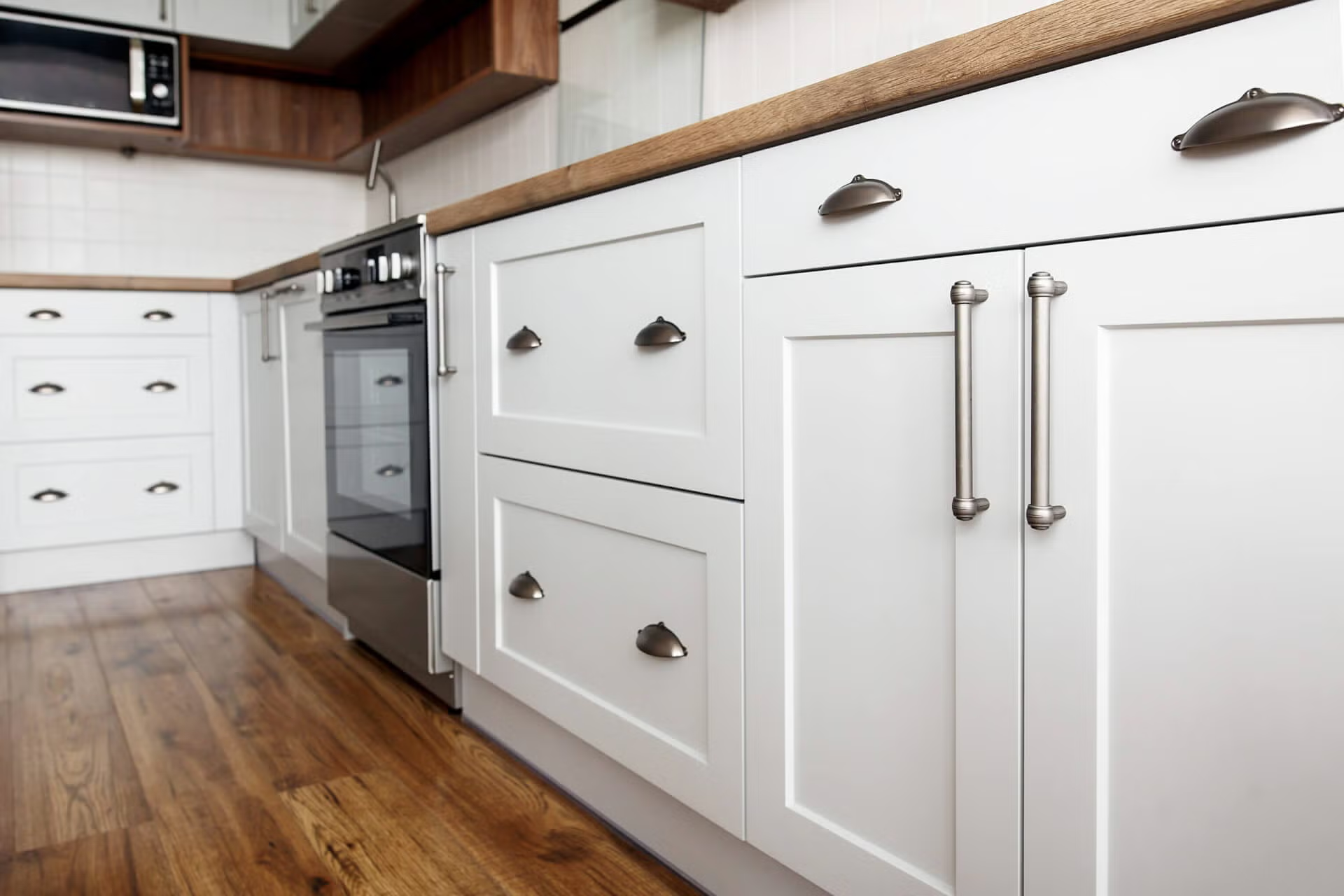
Cabinet Knobs - Kitchen knobs hardly get cleaned even if you wipe the cabinets frequently. Use some hydrogen peroxide on a microfiber cloth to remove buildup and germs.

Floors – Cleaning your floor with a sponge mop actually leaves buildup on the perimeter of your floor.  For a deep cleaning, get a bucket of hot water with a few drops of dish detergent and get down on your hands and knees. Give your floor a good scrubbing.  Use a microfiber cloth and a scrubbing sponge for tough spots. You can also use a steam machine to deep clean the floor.

Chairs and table – Wiping down your table after dinner is probably part of your routine, but when was the last time you “deep cleaned” your kitchen chairs? And how about the base of the table?  When you are ready to deep clean your table and chairs, start with a bucket of hot water and a microfiber cloth and wipe off dust, grime and grease. Don’t bother with a cleaning product. Using the hot water and microfiber will leave the table and chairs clean without a film from a cleaner.

Light fixtures – A quick tip to deep cleaning your kitchen light fixtures is to pop the glass shades into the dishwasher. The hot water and agitation will remove built up dirt and grease. They will come out of the dishwasher sparkling clean.

For more information from DIY green cleaning expert Leslie Reichert, visit https://www.facebook.com/GreenCleaningCoach/
How to Clean Cast Iron, Wooden Cutting Boards, & More

Cleaning Supplies

After years of trying to clean those “hard to clean” kitchen items, I’ve found that it’s really not the technique but the tools that make the task easier.  Things like cast iron or wooden cutting boards have been around for hundreds of years but just recently technology has caught up to make them easier to clean.  Let’s look at some simple methods of cleaning these hard-to-clean items and then we will look at some new tools that make cleaning them very simple.

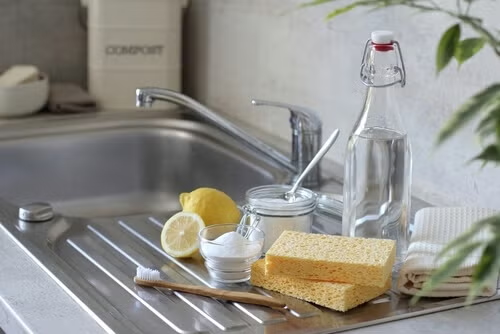
Cast iron – One thing to remember when cleaning cast iron is that it is a very porous metal. If you use any type of soap on cast iron, it will absorb it and then leech it back into your food when cooking. One simple way of cleaning your cast iron without soap is to use salt to give it a good scrub. The salt used with a sponge will work to remove any built-up food on the pan. And it will rinse right off the pan and leave it free from chemicals.

A new alternative for cleaning cast iron is a product called CM Scrubber. It’s made of chain mail – which is the same technology used in the Middle Ages to make armor.  This simple chain mail scrubber is made of woven metal links that work to scrub the cast iron without chemicals. All you do is use the metal scrubber on the pan and rinse.  It’s truly amazing how easy it makes it to clean your cast iron pans.

Wooden cutting boards – Wooden cutting boards are also very porous, but research has shown that the wood actually works to kill bacteria left on the wood. This does not mean we don’t have to clean the wood after using it. A simple solution to clean a wooden cutting board is to cut a lemon in half and them dip the open end of the lemon into some table salt. Use the lemon and work the salt over the wood to clean and disinfect the cutting board. The acid in the lemon along with the scrubbing action of the salt will clean the cutting board without using harsh chemicals.

A cool tool to use on the cutting board is called a Skoy Scrubber.  It’s made in Germany and is aggressive enough to scrub the wood without hurting it.  If you use this scrubber you don’t need to use any chemicals to clean the cutting board.

Fine china – If you have very expensive china and don’t trust your dishwasher to clean it without damage, there are some great cloths and sponges that will work to clean them gently and completely. My favorite tool is called a Skoy cloth.  It’s a cross between a paper towel and a sponge.  These cloths are made in Germany, just like the Skoy Scrubs, from a by-product of paper. They are strong, yet gentle and are perfect for washing your fine china.

Expensive crystal – To avoid having film and spots on your fine crystal I recommend washing them by hand. You can use the Skoy cloth and a gentle dish soap to wash them and then rinse with warm water. The best tool to dry the glass is a fine woven microfiber cloth. Don’t let the crystal air dry as that’s where you get spots. Instead rinse and then try right away with the microfiber cloth.

Tall thin vases – You can wash vases in the bottom drawer of a dishwasher but here is always that white film in the bottom of the vase that just won’t come off.  A simple trick it to sprinkle table salt into the bottom and drop in some ice chips. The salt will melt into the ice and turn into a scrubber.  Swish the salt/ice combination around for a few minutes then rinse with hot water.  The salt will scrub away all the film.

keeping kitchen clean

For more information from DIY green cleaning expert Leslie Reichert, visit https://www.facebook.com/GreenCleaningCoach/
How Often Should You Clean Bedroom & Bathroom Items?

Ever since it was reported that Oprah has clean sheets on her bed every day – the rest of us wonder if that’s the standard we should be striving to achieve.  If we had a staff like Oprah, we could have our sheets, towels and even our shower curtains changed daily. Sheets and towels absorb sweat, dead skin cells, body oils, drool and other body fluids. If they aren’t washed frequently, sheets and towels become a breeding ground for dust mites, mold and mildew. So, let’s balance our dreams of having the ultimately clean bathroom with practicality and see if we can determine how often we should be cleaning things in our bathroom and bedroom.

Towels – Hand towels in a bathroom should be changed out daily as they get used a lot.  Towels used after a shower should be washed every other day. In between uses, the towels should be hung so that they can dry out completely throughout the day. Mold and mildew can start forming a few hours after using the towel.

Washcloths – Washcloths can be on the same cleaning schedule as your bath towels. Washcloths collect dead skin cells with each use so more than two uses are not recommended.  They can be washed with the bath towels using hot water to help disinfect them.

Bath mats – Bath mats should be washed once a week. They accumulate dust, fibers, and hair as well as dirt from the floor. Washing once a week keeps them clean and fresh. It also helps to battle any mold or mildew that could be forming inside the mat fibers.

Plastic shower curtains – Plastic shower curtains should be cleaned once a month. Soap scum and mildew build up on the inside of the plastic. You can place a shower curtain in the washing machine and it will come out looking brand new.  Just put the shower curtain in the wash using hot water and two bath towels. Add a touch of laundry detergent to the washer as well.  Wash and rinse the shower curtain on a regular cycle. Hang the plastic shower curtain back up as normal to allow it to air dry.

Use your dishwasher --A quick tip for cleaning things on your vanity is to enlist your dishwasher. Your toothbrush holder, towel caddies, toothpaste holders and even brushes and combs can be popped into the top drawer of the dishwasher. Use the regular dishwashing detergent and a regular washing cycle.  The items will come out clean and disinfected.

Sheets – Most experts agree that sheets should be washed at least once every other week. If you have night sweats or tend to sweat more than the average person, you should wash your sheets once a week. Make sure to wash your sheets in a gentle soap versus a detergent. Detergents can cause skin irritations. They don’t rinse totally out of your sheets. Soaps, on the other handwash completely out of the fabric.

remove-bed-bugs

Blankets – Blankets need to be washed frequently, but not as often as sheets. Blankets can become infested with dust mites. Most experts recommend washing blankets monthly in extremely hot water and drying them on a hot setting in the dryer. The high heat will kill the dust mites.  If you deal with a dust mite allergy, you may need to wash the blankets more often.

Comforters – Down comforters can be cleaned on the same schedule as blankets. Down comforters are very difficult to wash and dry so if you want to remove the dust and allergens quickly, you can pop the comforter directly into the dryer and set it to the hottest setting. The dryer will remove the dust and the hot air will kill the dust mites.

Pillows – Pillows are not usually on our list of things to wash. But they can become extremely infested with dust mites as well as body oils and fluids.  To prevent the pillow from absorbing fluids and oils, you can use a pillow encasement that will keep the pillows clean and keep dust mites away from the pillow filling. The encasement is much easier to wash than an entire pillow.

Quilts – Hand made quilts need special attention. They needed to be washed with care. You can place the quilt in the dryer on a hot setting for a few minutes to kill dust mites and remove the dust. You can also use a clothesline and hang it outside in the bright sunlight to help keep the dust mites at bay.


For more information from DIY green cleaning expert Leslie Reichert, visit https://www.facebook.com/GreenCleaningCoach/