During the holiday season nothing stresses people out more than cleaning up for guests. Short on time? Use these holiday cleaning “hacks” to get your home ready in a jiffy.
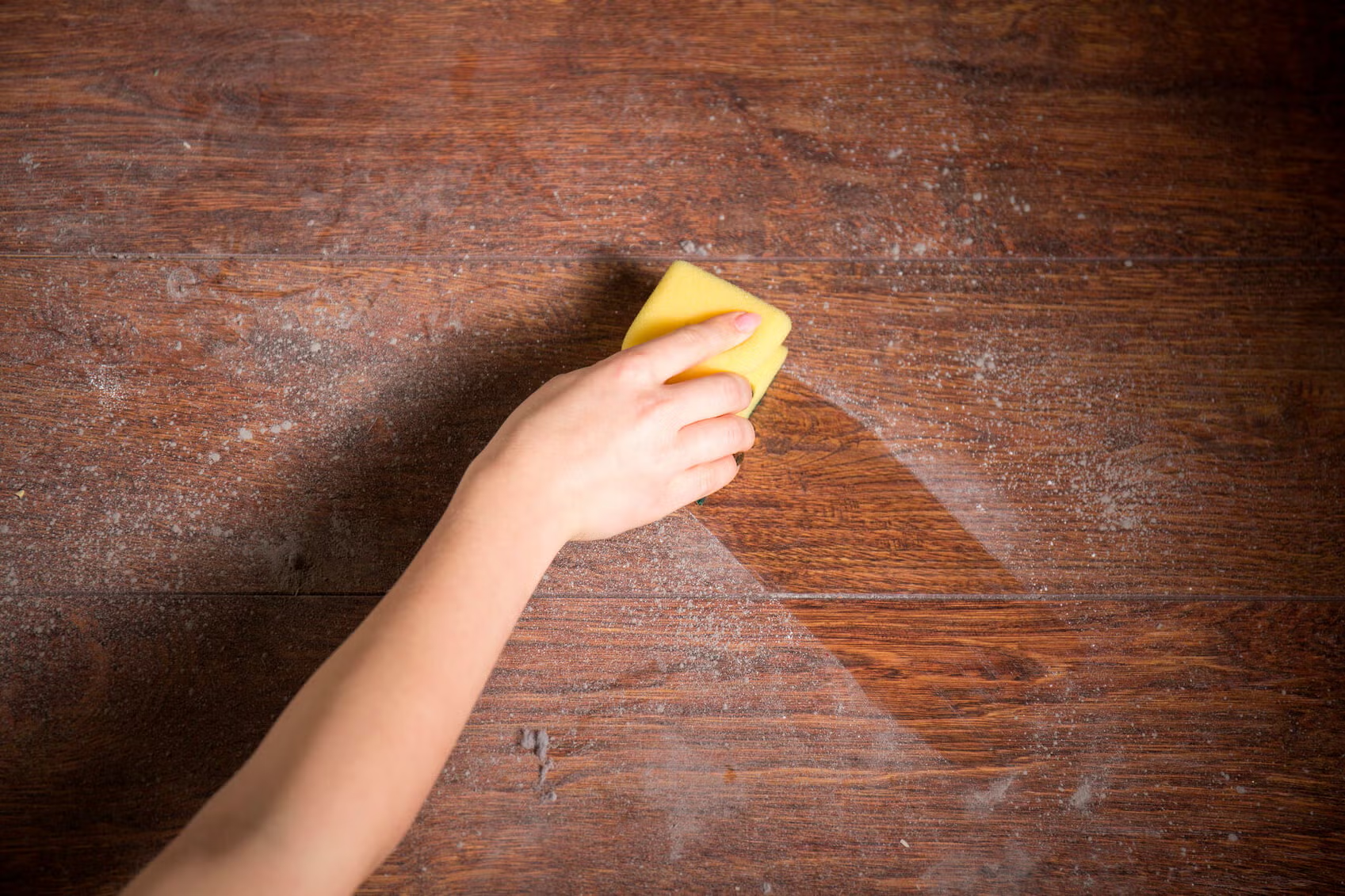
Only clean what’s dirty – As pros we are programmed for thoroughness but with a jiffy clean we are intentionally finding ways to cut corners. When you're in a hurry, why clean things that aren’t dirty? Instead, spot clean the areas that you can see are dirty like the handles on refrigerators and microwaves. Look around and then clean the areas that look like they need attention.
Use a “tool belt” – You would never see a carpenter going up and down a ladder every time he needed a nail. Instead he carries everything he needs in a tool belt so he can work more efficiently. You can use the same system to make your cleaning easier. Gather all your cleaning products, cloths, brushes and other tools you’ll need and place them in a bucket so you can take them from room to room. Or you can find a comfortable apron with pockets and loops so your bottles and rags will be right where you need them.

Use your vacuum instead of a dry mop – Dry mops do a great job of lifting dirt, but you still have to use a dusting broom and a dustpan to get the dirt off the floor. Remove this step by just using a canister style vacuum with a dusting brush attachment. You’ll be cleaning the same area but removing the step of filling and emptying the dust pan.
Use a feather duster – Instead of polishing your furniture with a polishing spray and cloth, switch to a high quality ostrich feather duster. You can dust every flat surface without moving a thing. A genuine ostrich feather duster will hold onto the dust until you shake it out. Can’t find one? Try a microfiber “feather” duster instead.

Use your appliances – Don’t waste time cleaning something when you can let the dishwasher do the work for you. You can use it to clean items on your bathroom vanity or even the filter over your stove. Your dishwasher can be a very valuable cleaning tool.
Only clean what your guests will see – If you only have a small amount of time to clean, focus only on the areas a guest might see. Leave the upstairs bedrooms for another time. Spend your time on the entry way, hallway, kitchen and the room where you might ask your guests to sit. As far as the other rooms and the upstairs - keep the doors closed. Guests usually won’t open a closed door.
Clean your bathroom in minutes – Start by NOT cleaning the shower. Use a damp, fine woven microfiber cloth and wipe all the surfaces. Start with the mirrors, then move down to the vanity area and save the toilet for last. You don’t even have to dry the areas once you’ve wiped them with a microfiber cloth. They will look perfect when you’re done.

Just swish the toilet bowl– Don’t bother with toilet bowl cleaner when you are quick cleaning. Use the toilet brush and give the inside of the toilet a quick swish. Then flush and move on.
Use your dishwasher to hide dirty dishes – If you don’t have a dishwasher then you can place a large tub under the sink and place the dirty dishes there until you have time to wash them.
Steam clean your microwave – Place a microwavable bowl filled with water into the microwave. Run it on high for 3-4 minutes. Once it’s done, carefully remove the bowl and wipe the sides of the microwave with a microfiber cloth. Any stuck on food should wipe right off.
Lint rollers and paint brushes – Need to get into tight areas quickly? Keep a lint roller and paintbrush in your tool apron. Lint rollers are great for pet hair on furniture as well as dusting lamp shades. Paint brushes are wonderful for removing dust and dirt tucked into hard to reach areas.

Use natural fragrances to cover up your cleaning problems – Sometimes you just don’t have the time to clean but you can “hide” your dirt behind a nice aroma. But don't use store-bought air fresheners - synthetic fragrances usually contain toxins you don't want in your home. Instead, make natural fragrances in a jiffy using a few drops of your favorite essential oils mixed into a bottle of witch hazel and spray entryways and door jambs so your guests will smell the lovely fragrance and overlook your cleaning shortcomings.
But let's face it. Some days there is no gas in the tank for anything extra. If you’ve run out of time or motivation to even do the smallest cleanup, just turn down the lights and turn on a few battery operated candles. You’ll be surprised how nice and clean a room looks with minimal lighting and a few candles.
If you have more time for truly sparkling results, check out the new Holiday Clean Up: 20-Day Challenge I created with Maid Brigade. It's a step-by-step plan to deep clean the three most visible rooms during entertaining, with only one or two tasks per day. Keep it on your phone or tablet for a handy reference during the holidays.