
Tag: home organization

Organizational Tips to Maintain a Tidy Home Between Cleanings

A tidy, clutter-free home isn’t just about appearances. In a fast-paced world, clutter can quickly accumulate and lead to a sense of chaos. This is where Maid Brigade comes in. With their expert house cleaning services, Maid Brigade improves the quality of life for every customer. They understand that a clean home is not just a luxury but a necessity for mental and physical well-being.

Consistent organization is fundamental to achieving and maintaining this level of cleanliness. By implementing simple daily habits and routines, you can ensure that your home remains a sanctuary of peace and order between professional cleanings. Keeping your space tidy not only promotes a healthier lifestyle by reducing allergens and creating a more hygienic environment, it also significantly improves your time management. When everything has its place and clutter is kept at bay, you spend less time searching for items and more time enjoying your home.

Whether you’re juggling a busy career, managing a household, or simply looking to create a more calming living space, the tips in this article will support your efforts in keeping your home tidy and stress-free. 


Daily Habits for a Clutter-Free Home

Maintaining a clutter-free home starts with incorporating a few simple daily habits that make a big difference over time. These habits don’t just keep your home tidy — they also create a sense of accomplishment and peace.

Start Your Day with a Small Win

Tidiness requires the right mindset. To get in the right frame of mind, it helps to start the day with an easy win. One of the simplest ways to set a positive tone for the day is to make your bed each morning. This small task takes just a few minutes but can have a significant impact on your mindset. A neatly made bed instantly makes your bedroom look more organized and provides a sense of order and accomplishment. It’s a simple habit that sets the stage for a productive day and encourages further tidiness.

Clean as You Go

Adopting the “clean as you go” mindset can dramatically reduce the amount of clutter that accumulates throughout the day. Whether you’re cooking, working, or relaxing, make it a habit to tidy up as you move from one activity to the next. For instance, while preparing meals, wash dishes or load them into the dishwasher as you use them. After meals, immediately put away leftovers. This approach prevents messes from piling up and makes end-of-day cleaning much more manageable.

Evening Tidy-Up Routine

End your day with a quick, 10-minute tidy-up in the evening. This routine doesn’t have to be exhaustive but should focus on putting things back in their designated places and addressing any visible clutter. Start by clearing off surfaces such as countertops, tables, and desks. Put away any stray items like books, toys, or clothes that may have been left out during the day. A quick sweep of high-traffic areas, such as the living room and kitchen, can also help ensure that you wake up to a tidy home.

Incorporating these daily habits into your routine can significantly reduce clutter and make your home feel more organized. Starting with just a short list of daily activities, you’ll create an environment that is not only easier to maintain but also more enjoyable to live in.


Weekly Organizational Strategies

Now it’s time to start thinking bigger. Once you’ve mastered the daily tidying routine, implementing weekly organizational strategies can further help maintain an orderly home. By dedicating some time each week to address common problem areas, you can keep your living space looking its best.

Declutter Hot Spots

Every home has its hot spots — those areas where clutter tends to accumulate quickly. Common hot spots include entryways, kitchen counters, and living room tables. To keep these areas under control, set aside time each week to declutter and organize them. Start by identifying the most problematic spots in your home. Then, go through each area, sorting items into categories such as “keep,” “discard,” and “relocate.” This practice not only keeps your home looking neat but also makes it easier to find items when you need them.

Laundry Routine

Laundry can quickly become overwhelming if not managed properly. Establishing a consistent laundry routine helps keep dirty clothes from piling up and ensures that you always have clean clothes available. Choose specific days of the week for doing laundry, such as Tuesdays and Saturdays, and stick to this schedule. Break the process into smaller, manageable tasks, and you can prevent it from becoming a daunting chore.

Paper Management

Paper clutter is another common issue in many households. From mail and bills to schoolwork and receipts, it’s easy for paper to accumulate if not managed regularly. Create a dedicated space for handling paper, such as a desk or a filing cabinet, and establish a system for sorting and storing documents. Set aside time each week to go through the paper, discarding anything unnecessary and filing important documents. Consider using labeled folders or trays to organize different types of paper to make it easier to find what you need when you need it.

By incorporating these weekly organizational strategies into your routine, you can effectively manage clutter and maintain a tidy home. These strategies complement your daily habits, ensuring that your home remains a haven of order and tranquility.


Seasonal Deep Cleans

While daily and weekly habits are essential for maintaining a tidy home, seasonal deep cleans provide the perfect opportunity to tackle more extensive decluttering and organization tasks. By aligning your efforts with the changing seasons, you can efficiently manage your space and even refresh your living environment.

Declutter by Season

Each season brings its own set of activities, weather conditions, and associated clutter. Use the transition between seasons as a cue to declutter and reorganize your home. For example, as winter gives way to spring, take the opportunity to store away heavy blankets and winter gear. Sort through your belongings, donating or discarding items that are no longer needed or used. This seasonal approach to decluttering keeps your home organized and prevents the buildup of unnecessary items.

Rotate Clothing

One of the most effective ways to keep your wardrobe manageable is to rotate your clothing based on the season. At the start of each season, go through your closet and drawers, setting aside clothes that are not suitable for the upcoming weather. Store out-of-season clothing in labeled bins or vacuum-sealed bags to save space. This practice not only helps you maintain an organized closet but also makes it easier to find the clothes you need. When you switch your wardrobe each season, it’s also a great time to evaluate what you have and decide if any items need to be donated or discarded.

Utilize Maid Brigade’s Seasonal Cleaning Services

Seasonal changes are an ideal time to utilize Maid Brigade’s professional cleaning services for a deeper clean. While regular cleaning keeps your home tidy, a seasonal deep clean by Maid Brigade can address those hard-to-reach areas and more intensive tasks that accumulate over time.

Seasonal deep cleans not only refresh your home but also provide a structured approach to decluttering and organizing. This approach ensures that each season brings a renewed sense of neatness to your living space.

Maintaining Tidiness

Maintaining a tidy home is a commitment that benefits from the involvement of the entire household. By assigning specific tasks to each family member, you can distribute the workload and foster a sense of collective responsibility for keeping your home in order. Encouraging children to pick up after themselves, helping them understand the value of organization, and making cleaning a regular family routine can make a significant difference.

By incorporating the practices we’ve discussed into your routine, you create an environment that enhances the effectiveness of your cleaning day. When your Maid Brigade cleaning team arrives, they can focus on providing a meticulous, deep clean because the everyday clutter and mess are already under control. This synergy between your efforts and Maid Brigade’s expertise ensures that your home remains sparkling clean and inviting.
Maid Brigade is here to support you every step of the way with their reliable and thorough cleaning services. By scheduling regular cleanings with Maid Brigade, you can maintain a pristine home environment that you and your family will love.
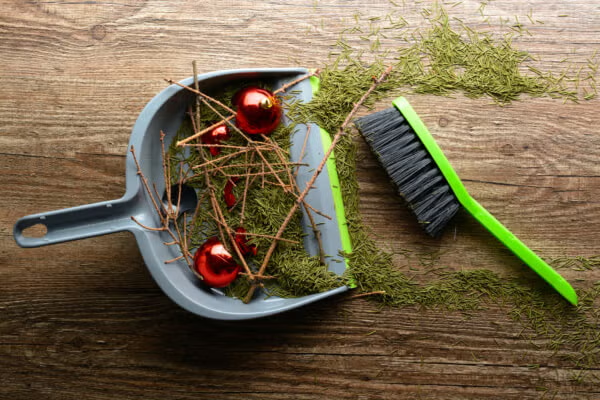

Cleaning your house after the Holiday Season

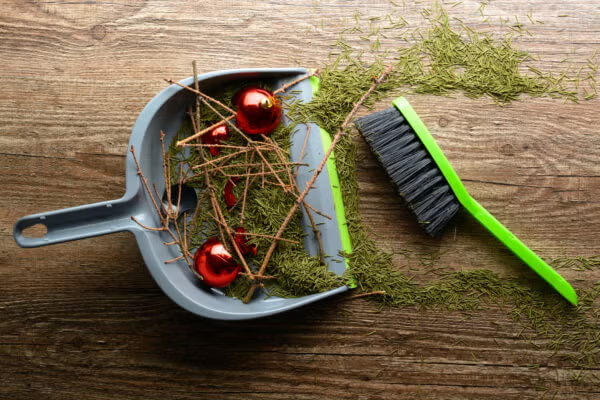
What’s your official day to do your holiday cleanup? I’m sure your answer really depends on when you put your decorations up.  A good rule of thumb is January 6, which is known as “little Christmas.” Personally, I’m feeling pretty good if I get my decorations down by Valentine’s Day! It really doesn’t matter what day you choose as long as you take them down and put them away so they are organized for next year. Once the decorations are down and stored, we can then focus on the cleaning.

Organizing your Christmas decorations

  • You can choose to put your decorations away by room or by item. I like to store all my window and outside lights together as they are the first I’ll want to get out next year. Store all the decorations for each tree together so that you know which decorations go with which tree. Use clear storage tubs so you can see what’s inside.
  • Labeling is very important. Make sure you list everything inside each storage tub so you don’t have to dig through everything again the following year.
  • Make a fun date with yourself (and your family) to take down the decorations. Set aside a specific block of time so you keep focused. Trying to take down decorations in between cooking dinner and folding laundry probably won’t work - you’ll end up frustrated next Christmas when you realize nothing was put away correctly.

Stains and cleanup problems

Christmas has its own set of cleaning problems. Below are some tricks on how to deal with them.

Pine pitch - If you had a real Christmas tree you may have some sticky pine pitch on your carpeting or hardwood floors. Once evergreen trees come inside a home and warm up, the sap inside the tree branches drips out of the trimmed limbs. This is called pine pitch and it can be very hard to remove. To remove it, you’ll want to start by rubbing the area with an ice cube to freeze the sap. Scrape as much of the sap off of the flooring as you can, then use a clean cloth dampened with rubbing alcohol to dab the area until the pitch is removed from the floor.

Water stains - You may have some water stains from the tree stand overflowing. This stain can be removed by using vinegar. Pour vinegar into a spray bottle and liberally spray the entire area. Let it sit without scrubbing. After 30 minutes dab the area with a paper towel and repeat the process until the stain disappears.

Table Linen stains - Don’t put your table linens away until you know they are completely clean and stain free. You can use rubbing alcohol on greasy stains and oxygen bleach for food spots. Once the linens are clean and dry, press them and then wrap them in tissue paper and store them in an airtight container.

Window sill spots – If you have discovered the trick of using white athletic tape to hold your Christmas window lights in place you also are dealing with the adhesive residue left when you remove it. An easy remedy is to scrape off as much of the adhesive as you can with a putty knife. Dampen the area with rubbing alcohol, which works to break down the adhesive. Place a drop of dish detergent over the area and work it into the residue. Wipe the window sill with warm water and a microfiber cloth.

Floors – Your floors will have taken a beating over the holidays between decorations, guests and all the cooking and baking. Plan to give each hard floor a good scrubbing on your hands and knees if you can. Start by moving all your furniture away from the walls and vacuuming the floor and the wood trim around the room. Use a bucket of hot water with a drop of dish soap and use a microfiber cloth to clean your way around the room. Once the outside of the room is dry, move your furniture from the middle of the room to the edges and wash the middle area. Once the floor is completely dry, you can replace area rugs and reset the furniture.

Guest room sheets – Strip all the beds and wash them in hot water. Add a touch of oxygen bleach to clean and disinfect them. Dry them on high heat to kill dust mites and other allergens. While the sheets are in the dryer, use an upholstery tool to vacuum the mattress and the sides of the box springs.  Wipe down the bed frame and remake the bed as soon as the sheets are dry. A simple trick to remove wrinkles in the sheets is to spray them with witch hazel after they are on the bed. You can add a few drops of an essential oil to create a fragrant linen spray.

Keeping Your Home Safe for Your Child

September is baby safety month. Whether they’re a newborn or an active toddler, it’s a great reminder that you always need to be very cognizant when keeping your home safe for your children. There’s a lot of preparation before the baby arrives to make your home a safe place for them to come home. Below, we outline some important points to keep in mind

Home Safety Tips for Newborns

Getting your newborn’s room ready prior to their arrival is exciting but there are some things you need to consider.

Furniture –Know what materials are used in any of the furniture you are buying for the room. Pressboard and plywood contain formaldehyde that converts into a dangerous chemical at room temperature. The fumes can be harmful to a baby’s lungs.

Wall Paint – Before bringing out the paint swatches, make sure the paint that you’re planning to use doesn’t contain harmful toxins. Non-toxic paint will keep the air quality safe for you and your baby.

Flooring – Carpets and hardwood floors can both contain formaldehyde. Once installed, they can release toxins for months. Do your research and find a carpet or hardwood that uses chemical-free padding or adhesives.

Mattress –Look for a mattress manufacturer that uses all-natural materials so you don’t run the risk of buying one that may contain formaldehyde. Be sure to purchase a very firm mattress so that the baby sleeps on top of the surface instead of sinking into the mattress which can be a suffocation risk.

New clothing – Make sure that all new baby clothes get washed in a gentle, all-natural laundry soap. Stay away from fragrances that can affect your baby’s lungs. There are many DIY laundry soap options where you can control the ingredients if you’d prefer to make your own.

Keeping Your Toddler Safe At Home

As your sweet baby begins crawling and then gradually moves into walking, suddenly there are more safety concerns around your home. Everything from your waist down can be a danger so you’ll need to make sure to recognize those areas and baby proof wherever necessary. Here are a few safety items  to check on around your home:

Laundry Room

  • Keep your cleaning products in a place where your child can’t reach. Use an out-of-reach cabinet in your laundry room if possible. If one is not available, consider putting a child-proof lock on the cabinet you’ll be using.
  • Hide laundry pods that have recently become a safety issue for young children. Laundry pods are visually appealing because of their bright colors and resemblance to candy.

Living Room

  • Add a fireplace “fence” around a fireplace or woodstove.
  • Remove glass topped furniture as they can not only be a danger due to their sharp corners but can also crack and break should a child crawl on top of it.
  • Windows - Always open windows from the top down. Purchase window locks that prevent the window from being opened by your child.

Bathroom

  • Make sure items like razors, makeup, and medicine are put in locked closets or drawers. Remember that cotton swabs, cotton balls, and other small objects can be a choking risk for small children.
  • Add a safety latch to all toilets in your home.

Bedroom

  • Anchor tall furniture to the walls to prevent them from falling if your child were to climb them.
  • Avoid strangulation from a blind cord by installing cordless blinds or tying the cords up high next to the curtain rod.

Kitchen

  • Many kitchen appliances are a safety risk for children. They can burn themselves on a stove, get their hand caught in a dishwasher or crawl into a front-loading washer. Put safety locks on all your appliances and make sure you are always around when your child is near the kitchen area.

Smaller Areas Around the Home

  • Outlets - Not only do you want to use the outlet protectors for unused plugs but also find an outlet plug cover to keep cords and plugs out of reach.
  • Stairs - Use safety gates at the top and bottom of all stairways. Keep the stairs clear of clutter to prevent slips and falls.
  • Fire Alarms - Check your fire alarms monthly and change the batteries twice a year. Have a plan to evacuate your child from the home should you have a fire.

Keeping your children safe is on top of every parent’s mind. While Baby Safety Month is recognized in September, we know that their safety is a year-round concern. Take a look at your home’s biggest dangers and be sure to install the proper precautions wherever they are needed.

Cleaning Tips Before an Extended Vacation

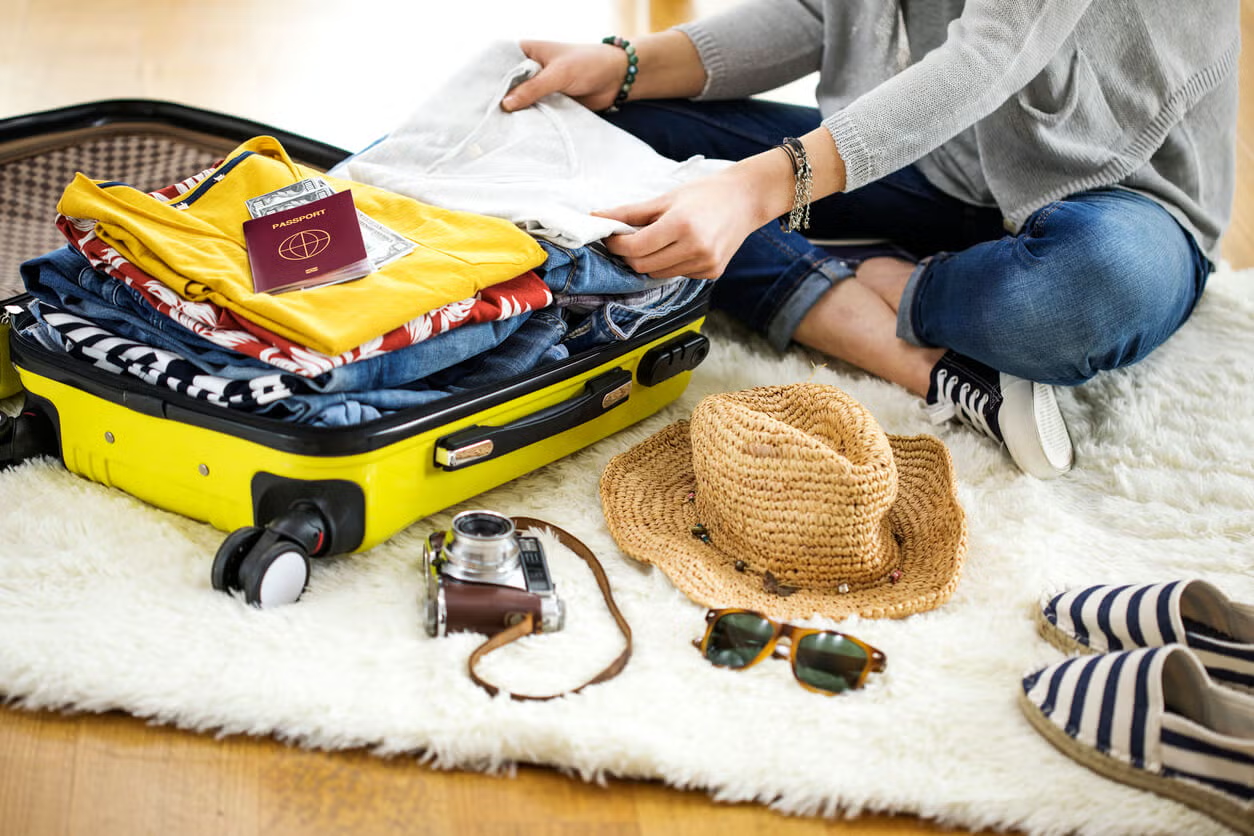
We’re looking forward to those final summer vacations this year! Packing and prepping for a vacation can be stressful. The last thing you want to think about before going on the vacation of your dreams is cleaning your home. But if you don’t think about a few strategic spots that need your attention, you will come home to a nightmare.

Enjoy a stress-free vacation by planning ahead of time. Starting a few days prior to leaving on your trip use these 10 tips to organize yourself and your home so you can leave for your vacation confident that everything is clean and ready to be left unattended.

  1. Turn off the water source to your washer and the power source to your dryer. Leave the lid up or open depending on if you have a top loader or a front loader. You want any moisture and evaporate which will prevent mold forming while you are gone.
  2. Go through your refrigerator and remove all the leftovers and items that could spoil. Place freezable food in the freezer and wipe all the refrigerator surfaces so they are free from spills. Condiments can be left for longer periods of time.
  3. Run the disposal with ice cubes and salt to remove any buildup of food inside it. Run hot water for a few minutes to remove food particles so the blades will be free of any built up rotting food.
  4. Wipe the sink of all moisture and cap the drain or disposal to prevent any rotting food particles from attracting flies or other small insects.
  5. Clean all your dirty laundry and fold it and put it away. You will enjoy everything being organized when you get home.
  6. Clean the sheets on your bed before leaving so that you can jump into a nice clean bed after a long relaxing vacation.
  7. Run the dishwasher so there is not a dirty dish left in the house. Empty the dishwasher and put away all the dishes. Leave the dishwasher ajar so that the leftover moisture can evaporate.
  8. Empty the trash in all rooms and leave it in your outdoor trash receptacle. Rinse the inside of the trash cans so there is nothing left to attract any “critters.” Move the outdoor trash receptacle away from your house. Trash inside the can attract flies and rodents that could try to move into your home.
  9. Give all the showers and bathtubs a good cleaning before you leave. Remove hair and debris from the drain. Wipe the walls dry and leave the shower curtain closed so mold will not grow in the creases of the curtain while you are away. Make sure you remove any wet towels or washcloths and run them through the washer and dryer. Never leave items in the washer or dryer while you are away.
  10. Remove the grounds from the last pot of coffee. Run the pieces of the coffee maker through the dishwasher and leave the water reservoir open so that moisture can evaporate. Nothing is worse than coming home to molding grounds in your coffee maker.

Once your vacation home prep is complete, you’ll be able to have an enjoyable, relaxing vacation. Arrive home to a clean house and pick up right where you left off!


For more great cleaning tips, check out the Green Cleaning Expert, Leslie Reichert at greencleaningcoach.com


Smoke alarms: How to clean them, when to maintain them, where to install them

Smoke alarms: a How-to Guide

A fire fighter once told me, “The best way to survive a fire is to prevent it. If you can’t prevent it, you want to use early detection as your shield.”  Early detection means having smoke alarms properly installed throughout your home and maintaining them regularly. These small devices will save your life, but only if you keep them functioning properly.  Smoke alarms should be cleaned and maintained on a regular basis. The change to daylight standard time is one good time for this simple but important task.

How to clean your smoke detectors

First, remove the smoke alarm unit from the ceiling or wall. (Be sure to use a sturdy ladder, don’t climb higher than the ladder cautions, and if someone else cannot be home while you do this put your phone at the base of the ladder before you climb. Climb down and off the ladder before proceeding with the following steps.)

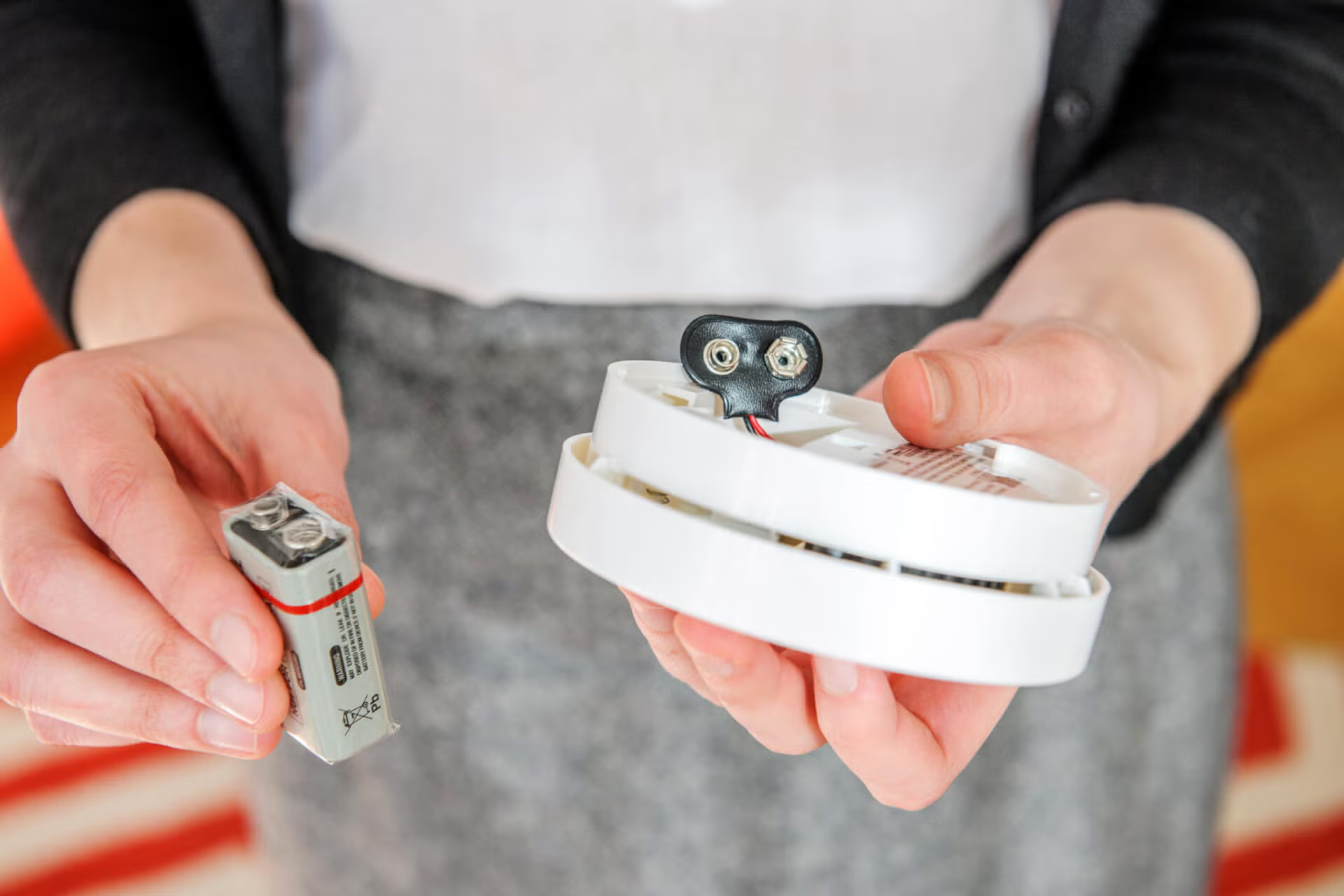
Dust the outside of the smoke detector with a dry microfiber cloth. Remove the battery and plan to dispose of it safely. Use a paint brush or your vacuum’s upholstery tool to clean the interior and the air vents of the unit. Be gentle in order to avoid causing damage to the circuit board. Compressed air works well too but be careful around electric components.

Connect a new battery securely, close the lid carefully, and test the unit. If all is well, replace the unit on the wall or ceiling, taking precaution for your safety. Repeat this process for every smoke detector in your home. Read the following pointers before starting this task:

  • Make sure to never submerge any part of the smoke detector in water
  • Don’t use any type of liquid cleaning chemicals
  • Wipe the entire outside with a microfiber cloth
  • Be sure the air vents are well cleaned for good air flow

Some other things to consider about taking care of your smoke alarms are...

When to replace smoke detector batteries

Most people don’t realize that the batteries should be replaced TWICE a year.   An easy way to keep on track with this is to time it with daylight savings time and daylight standard time. When you set your clocks back or forward, replace the smoke alarm batteries on the same day. So when we “fall back” to daylight standard time on the first Sunday of November (11/5/2017), change all smoke alarm batteries and clean and test each unit.

Testing your smoke alarm unit

Test the smoke detector once the new batteries are installed. Simply push the red button down until it starts to beep. It will continue to beep a few times and then reset itself. Once reset it’s ready to be returned to its mounting frame.

If testing a hard wired system that’s connected directed to the fire department or a security company, make sure to let them know you’re cleaning and testing the system. They will take you off line to prevent a false alarm. Call them back when you’re finished to be put to active status.

Chirping smoke alarm

If it chirps, follow these steps:

  • Remove the smoke alarm unit from the ceiling.
  • Remove the battery.
  • Hold the test button down for a few seconds to drain the smoke alarm of any power left in the system.
  • Hold the test button down for another 15 seconds which will reset the unit and clear out the reason for it chirping.
  • Clean it out with canned compressed air or your vacuum cleaner.

Location and lifespan of smoke detectors

Every bedroom should have a smoke alarm unit as well as the hallways outside of the bedrooms.  Common areas like living rooms and dens should all have smoke alarms.  Each stairway should also have one. And don’t forget the basement and the garage.  Follow the manufacturer's instructions for installation. All smoke alarm units should be replaced every ten years.

Some smoke detectors use lithium batteries which can last up to 10 years, but 9V and other battery types are still common. Be sure you know what your smoke alarms need and stock up next time you shop so you’ll be prepared to follow these steps when you change your clocks back to daylight standard time. Remember what the fireman said about early detection…


For more information from DIY green cleaning expert Leslie Reichert, visit greencleaningcoach.com

Deep Cleaning the Kitchen

Once in a separate building altogether, kitchens have become the centerpieces of our homes today.  They are now meant for living, not just cooking.  Some modern kitchens have open floor plans that include a great room and a fireplace and some even flow outdoors. But regardless of whether your kitchen dated or updated, it is probably the place where people most often congregate. And with all this added activity it’s even more important this room is clean and organized.

Although each deep cleaning task should be completed start to finish, all tasks do not need to be performed on the same day (or weekend). To help make sure you don’t take on too much at once, this how-to guide is broken into two posts.

Part 1: The Pantry and the Refrigerator

Before you start

Before starting to deep clean your kitchen take the time for a little prep work. Start by clearing away the clutter and putting everything back where it belongs.  Remove things that don’t belong in the kitchen.  Clean the table and wipe down all the counter tops so you are not distracted.

deep-cleaning-the-kitchen-pantry

The pantry

  • The best place to start is in the pantry or cabinets where dry and can goods are stored. Remove everything from the top shelf and place it on the counter. Check each and every package and can for an expiration date. Throw out expired food as well as items you won’t really ever use.  If you have unwanted items that are not expired, donate them to a local food pantry.
  • Vacuum the shelf using the upholstery attachment to remove dust and debris.
  • Using warm soapy water and a large looped microfiber cloth, wipe the entire shelf as well as the sides and top of the cabinet or closet. These areas accumulate cob webs and need to be washed carefully.
  • When replacing the shelf contents, organize things based on how you use them. For example, store all your baking needs in one area, can goods in another and snacks in yet another area. Look at the next shelf and see if there are items that should be brought up to this top shelf.
  • Consider storing your dry goods in plastic containers. These will prevent damage from moisture and insects. Great, inexpensive containers can be found where kitchen and container items are sold. Make sure containers are easy to open and comfortable to grab with one hand. Use a labeling system to keep track of freshness dates.
  • Continue this process throughout the other shelves until all are done.
  • Wash the inside of the door or cabinet with warm soapy water and rinse.
deep-cleaning-the-kitchen-refrigerator

The Fridge

  • The easiest way to clean and reorganize the refrigerator is to empty it out completely. Throw out everything that has expired as well as things that you know you won’t be using.
  • Take out all the removable shelves and place them in warm, soapy water to soak.
  • Wipe down the interior fridge walls using a damp microfiber cloth and a spray bottle of distilled white vinegar. You don’t want to expose your food to the ingredients in a cleaning product. Vinegar is a natural acid and will work to break down food particles as well as kill 98% of the bacteria.
  • Wash, rinse and dry all the removable shelves and replace them.
  • Replace the food items. Remember that items that need to say cool should be placed on the back of the shelves. We tend to put things that we use on the doors or on the front of the shelves but in reality, your refrigerator should be organized based on the item’s temperature requirement. Milk should be stored toward the back of the frig instead of on the door. Items that can be stored on the door are items that don’t really require a consistent temperature such as condiments or salad dressings.  Keep this in mind as you reorganize your refrigerator.
  • Clean the outside of the refrigerator. Pull it away from the wall and vacuum the coils on the back and base of the unit. Remove items from the top of the refrigerator and clean it with a good de-greasing cleaner, dish soap or vinegar. Rinse and wipe it dry before putting things back on top.  It’s a good idea to clean these items while they are off the top of the fridge.
  • Finally, clean the sides and front of the refrigerator and make sure to give the handles a really good scrub. Use a tooth brush to get in and around the areas where the handles connect to the door. That connection is a sneaky place where spills and drips accumulate yet it rarely gets cleaned.

A deep cleaning by Maid Brigade will take care of these hard to reach, often overlooked areas. We want you to come home to a happy, healthy home every time. Whether you need us for weekly, biweekly, or monthly service, or you're just looking for an occasional deep cleaning, we want you to know you can count on Maid Brigade. Find your local Maid Brigade here and get your free estimate.

Leslie Reichert has tons of green cleaning tips, at Greencleaningcoach.com.

Keep Your Closet Beautifully Organized

closet-organization

You never know what you have until you clean your closet.

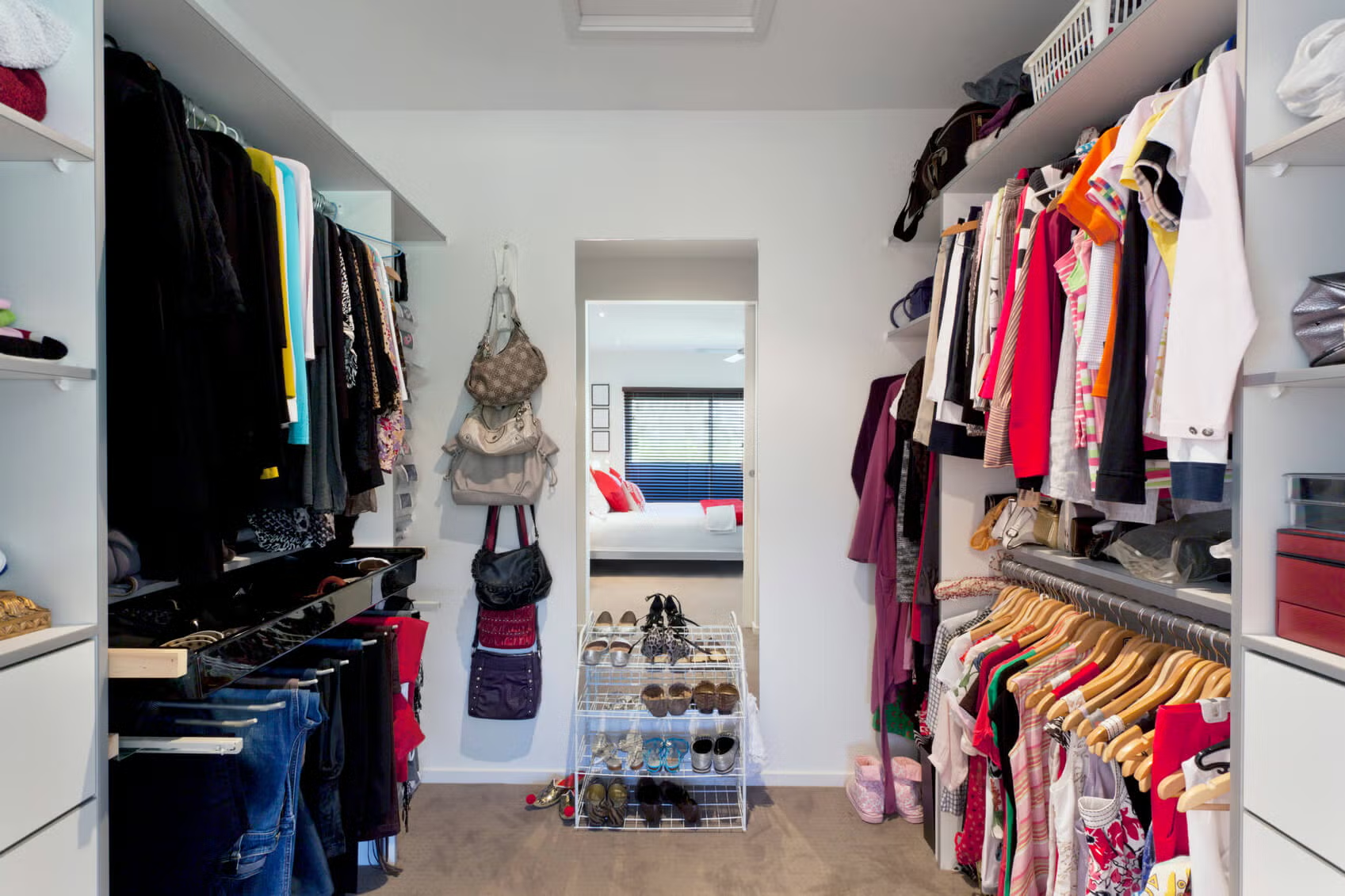
I love a clean closet but I have to admit, I hate cleaning it! Closets are like bedroom dresser drawers in the sense that if you don’t properly put your items away neatly, it quickly turns into an unorganized mess.

Not only do I use my beautiful walk-in bedroom closet for my clothes, but I also use it for storing papers, books, kids school calendars and everything I need in life at the moment. Sometimes I use it for storage, for hiding things like the vacuum, holiday presents, and even my laptop. My closet has always been my number one personal storage space that I can count on to call home for any of my personal items.

I have tried all different ways and techniques to keep my closets neat and I can honestly say that if I don’t go through my clothes, shoes, books, papers, handbags and jackets AT LEAST twice a year, everything quickly builds up.

Here are some clever ways to keep your closet clean that actually work:

When tackling your closet, put each item into one of three piles, the “yes” pile, the “no” pile, or the “not sure” pile. Try and keep the “not sure” pile to a minimum. Ask yourself, “does this item look good on me, do I love this item, is this the image I want to show.” If the answer is “no” to any of those questions, place the item in the “no” pile. Learn to let go of the past and feel good about donating your clothing to those in need.

After the “not sure” pile is completed, pull out all the clothes you are keeping because of sentimental reasons. If you don’t currently wear them but really cannot let go of these items yet, you may want to store them in another area of your home. Try not to keep them in your closet.

Organize all of your items in the closet into sections by color.

For shoes, face one shoe forward and one backwards. Storing your shoes like this gives you more room. You can also see the differences in the height of your heels too!

wooden-hangers

Use the same type of hangers throughout your closet. Everything looks so much neater. I do this in every closet in my home. It makes your clothes look so elegant, and the closet more aligned. Don't want to make the investment in new hangers all at once? Replace them in smaller groups, either by clothing type (pants first, then shirts, skirts, dresses, etc) or buy a new package of hangers each month until you have enough. The dry cleaners will be happy to have the wire hangers back, and a donation center will appreciate the hodgepodge of plastic and clip hangers you've collected over time.

When stacking piles of pants, hoodies, or even sweaters on the top shelf, try using a plastic clothing organizer called Slide N Stax®. It keeps your clothing stacked nicely, even when you are grabbing from the pile! If putting your clothing together by colors doesn’t suit you, try grouping your items a different way. For example, put all blouses together, then all dresses together, and so on. Or, you can group your items according to sleeve or pant length, or season to season. Choose whatever you think will work best for your personality and your lifestyle.

Buying and hanging belt racks around the closet is a huge help! I use belt racks to hang belts, bags, scarves, and ties.

To avoid wearing the same things each day, after the item is cleaned, hang it on the rod in front of all the other items. My husband does this with his suit shirts so he doesn’t wear the same shirts twice in the same work week.

When hanging up your new clothes of the season, place the hangers backwards in the closet. Every time you wear a piece of clothing, hang the item up with the hanger facing front. This way, when the season comes to an end, you will have a better idea of which items you haven’t worn that you may want to donate.

Space Bags are a great way to store items because they take up very little space and they can be easily stored under beds, in closets, or on shelves. For storing winter jackets and snow suits or even bulky bedding, these bags may come in handy! Some people even use these in their suitcases when traveling!

When storing clothes in an area of the basement, add some chalk pieces in cloth bags and pack them with your clothes in the storage bin. Chalk absorbs moisture and will help protect your clothing by keeping it dry.

Before putting all your clothing and other items back in the closet, be sure to clean your closet well. Vacuum with a HEPA filtered vacuum, paying close attention to corners and tops of shelves. Wipe everything down with your favorite homemade green cleaner and a microfiber cloth.

Finally, stand back and admire your beautifully organized closet!