Category: Green Cleaning Tips and Tricks

The 10 Best Ways to Clean Your Home Quickly and Efficiently

woman doing housekeepingSummer!  A perfect time to enjoy the outdoors and catch up on family time and relaxation!

But what about the house cleaning?  If you’re like me, house cleaning is not on my priority list during the summer months.

But it has to be done….and done right.  So what should you do?

The answer is simple.  Learn how to power clean your home quick and efficiently so you can enjoy the lazy days of summer!

Power cleaning is an organized and efficient way of cleaning in a short period of time. Ultimately, the better you get at power cleaning, the more time you can spend enjoying your summer activities.

Here are some ways to get you started on the right track of efficient home power cleaning:

  1. Set up a regular weekly cleaning schedule and stick to it.  Trust me, this could change your life for the better!  If you learn to stick to a basic cleaning routine, things won’t get so out of control.  Once this happens, all the other necessary homemaking tasks will not seem so overwhelming or take so long. Whether it’s a morning routine, a nighttime routine, or even a 10 minute “frenzy” routine, learn to stick with it if it works.
  1. Dress the part and dress for success.  What you wear to clean is important.  Create your own comfortable, washable, “cleaning uniform” that is easy to move around in.  Don’t forget form fitting gloves and comfy shoes!
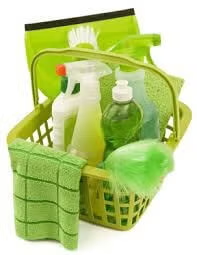
  1. Invest in well-made cleaning tools to clean your home with.  Good quality gloves, microfiber cloths, brushes, and mops can help make cleaning easier.  To lessen your trips back and forth to the cleaning cabinet, prepare a cleaner’s bucket filled with all tools, cleansers, brushes and color coded microfiber cloths needed to do the job quick and efficiently.  Have the microfiber mop and vacuum nearby.  Don’t forget to include a plastic bag for trash.
  1. Simplify your cleaning products by eliminating clutter in your own cleaning basket.  Most jobs can be done using the following types of cleaners:

-         Glass/multi-surface (make your own by combining 1/2 cup rubbing alcohol, 2 1/2 cups water, 1 tablespoon white vinegar)

-         Heavy duty/degreaser (make your own by combining equal parts of washing soda,castile soap, vinegar and warm water)

-         Powdered abrasive (make your own by combining 3 cups baking soda, 1 cup vinegar, 3 cups warm water)

-         Tile/Grout (make your own by combining 1 part hydrogen peroxide with 2 parts water)              

  1. Stay Motivated and focus.  Limit distractions while cleaning.  Don’t stop cleaning to check emails, talk on the phone, or watch your favorite soap opera.  Cleaning time will definitely slow down!  Instead, keep your cleaning time energized by playing your favorite upbeat music, or better yet, lessen the boredom of house cleaning by cleaning with a buddy.  After all, teamwork is especially helpful when it comes to changing sheets and making beds.
  1. Clean in a logical order.  Think through your order to see if it works for you.  Usually I start upstairs and clean each room top to bottom.  Don’t circle a room more than once.  Clean everything in your path before you move on.  For example, in the bathroom, stand in front of the sink, spray and wipe the mirror, scrub the sink, wipe down the counters and polish the fixtures all before moving from that spot.
  1. Learn to use two hands when cleaning.  Get into the habit of using both hands to attack cleaning tasks.  For example, spray the mirror with one hand and wipe it down with the other.  Scrub the counters with 2 cloths, one in each hand.
  1. Free up some space.  Set aside a few minutes a day to clean out a new closet, cabinet, or drawer and donate items you no longer use or need.
  1. Wrap it up.  Return cleaning tools to their proper areas.  Throw out trash.  Put soiled cloths in the laundry.  Check product levels and buy whatever is needed ahead of time.
  1. End your cleaning by spraying your home with a natural homemade scented spray. Combine 1 cup water, 2 tablespoons undiluted vodka, and 20 drops essential oil into a spray bottle and spray. 

Learning the art of power cleaning and sticking to a routine that keeps your home maintained on a daily basis will help you feel less overwhelmed and can free up some time for you to enjoy the summer by doing what you want to do.


 

Tips for A Better Spring Cleaning

Spring Cleaning VisualSpring is here!  It's time to enjoy the fresh air and warm weather!  It is also the perfect time to get rid of the clutter and give your home a good spring green cleaning.

Before cleaning, lessen the clutter.  Go through closets, basements, and garages and get rid of sports equipment, toys, games and clothes that are no longer being used.  Donate as much as you can to thrift stores and charities.  Donate old books, DVD's, and CD's to your local library.  Recycle plastic bags, paper and cardboard.  Return bottle, cans, and glass to the redemption center.  Trade in old video games and hardware, unused ipods, calculators, cameras and phones for extra money.

Once the clutter is gone, it's time to green clean!

The U.S. Environmental Protection Agency has a list on their website of cleaning products that are considered "safe," however, many cleaning products can be made right at home with simple ingredients like baking soda and vinegar.

Baking soda can be used as a scouring powder to clean sinks, countertops, faucets, ovens and appliances.  For tougher stains, add salt or boiling water to the baking soda paste and scrub with a microfiber cloth.

White distilled vinegar mixed with water is useful in removing fat-based and oil spills.  Vinegar alone helps in removing fat buildup.

To clean windows and mirrors, use a mix of vinegar and water in a spray bottle.  Wipe with a microfiber cloth.  Mop linoleum floors with 1 part vinegar to 10 parts hot water. Use a mild, vegetable oil-based soap for wooden or laminate floors.

Deodorize carpets by sprinkling them with baking soda.  Wait about an hour, then vacuum.  For tough carpet stains, blot stains with soda water or white vinegar.

Healthy House Cleaning

When it comes to household cleaning products, most of us will choose cleaning products that we think will make our homes shiny and clean, not really thinking about what the products are made up of.
 
But some of these products may pose health and environmental concerns.
 
The U.S. Poison Control Centers has shown in the past that cleaning products were responsible for many toxic exposures.  Because of this, the Centers for Disease Control and Prevention suggests you look for signal words, such as “caution,” “warning,” “danger,” or “poison,” that are required by law to be put on hazardous products.
 
Finding ways to reduce or eliminate the use of toxic chemicals in the cleaning products we use is important.  Much of our household cleaning can actually be done by using natural ingredients like vinegar, lemon juice, castile soap, water, hydrogen peroxide, and baking soda. 
 
According to the Household Products Database, from the National Library of Medicine, furniture polishes contain formaldehyde and can cause eye, skin, or respiratory tract infections.  Try making your own furniture polish by mixing one teaspoon olive oil and one-half cup vinegar.
 
Air fresheners may contain tiny fragrance particles that can lodge in your lungs.  They also can trigger allergic and asthmatic reactions. Instead of using air freshners, clean your indoor air with outdoor air by opening your windows.  Or, place bowls of baking soda around your home to keep it fresh.
 
Some detergents have fragances in them that contain phthalates, which are chemicals that have been linked to cancer. Other detergents contain alkyphenol ethoxylates, which are suspected hormone disruptors. Certain fragrances in fabric softeners may also contain chemicals that have been linked to cancer.  For a healtheir, more natural laundry detergent, clean your laundry with a mix of borax, lemon juice, hydrogen peroxide, vinegar, or washing soda.
 
Use a paste of water and baking soda or washing soda to scrub countertops, sinks and tubs. 
 
Clean windows with a spray bottle mix of water and one cup vinegar.
 
Disinfect kitchens and bathrooms by applying a mix of water and baking soda, and use warm water and plain soap instead of antibacterial soap.
 
Using homemade, natural, non-toxic ingredients will lessen our exposure to toxic chemicals which will make our home safer for our families.  

Easy Ways to Reduce Allergy Triggers

According to a study from the Centers for Disease Control and Prevention, 40 million Americans have been diagnosed with asthma.

Allergy and asthma symptoms can range from mild to severe and are usually triggered by exposure to allergens.  Believe it or not, most of these allergens are found right in your own home.  A survey from the Journal of Allergy and Clinical Immunology found at least six allergens were detectable in about 50 percent of homes.  Allergens, such as dust mites, pet dander, mold, and cockroach droppings, can be carried in the air and found on furniture, floors, and other surfaces around the home.

Removing allergy triggers from your home can reduce allergy and asthma symptoms.  Cleaning your home with natural cleaning products routinely can help reduce the exposure of allergens in your home.

Because dust mites thrive in dust, getting rid of dust will help reduce indoor allergens.  When cleaning, wear a dust mask.  Be sure to clean with a microfiber cloth which collects dust instead of scattering it.

Vacuuming also helps reduce allergens.  Pollen, dust mite, and cockroach droppings are heavier than pet dander so they are more likely to settle on furniture and other surfaces.  Using a HEPA filter vacuum will trap small particles and prevent them from spreading into the air.  Using HEPA filters in your air conditioner can also reduce allergens.

For the pet owners out there, keep your pet off the furniture and out of the bedroom as much as you can to lessen pet dander.  Vacuum regularly and wash your pet weekly if possible.

Molds and mildew love damp areas like basements and bathrooms.  Mold spores are allergens found in the air.  Clean mold with a vinegar/water/hydrogen peroxide mixture.  Use dehumidifier if needed to keep the humidity around 40 percent.

Dust mites live in bedding, pillows, and rugs, so be sure to wash your blankets, sheets, and pillowcases in hot water (around 130 degrees) once a week and dry them in a hot dryer to kill the dust mites.  Use allergy-proof casing for your mattresses and pillows.

To prevent pollen from entering your home, keep windows and doors closed as much as possible.  Avoid going outdoors when the pollen count is high, and in the early morning hours (between 5 am and 10 am).  Taking a shower and changing your clothes when coming in from outside also helps get rid of any pollen you might have picked up while outdoors.  Do not hang laundry out on the clothesline to dry since pollen can collect on them.

Many toxic household cleaners can trigger symptoms in those who have asthma or allergies.  Consider making your own cleaning products using ingredients like vinegar, lemons, baking soda, and hydrogen peroxide.


Clean Easier this Spring

Let's face it....

Green cleaning is the way to go these days.  Green cleaning products are less toxic and much safer for our families and our environment.

Making your own green household cleaners is easier than you think.  The ingredients are cheaper and most of them may already be sitting right in your cabinets at home:

White vinegar is an anti-fungal that also kills germs and bacteria.

Baking soda eliminates odors and works as a gentle scouring powder.

Borax eliminates odors, removes dirt, and acts as an anti-fungal and possible disinfectant.

Hydrogen peroxide is a great non-toxic bleach and stain remover.  It is also a proven disinfectant.

Club soda can be used as a stain remover and polisher.

Lemon juice is a bleach alternative that cuts grease and removes stains.

Liquid Castile soap works as an all-purpose cleaner, grease-cutter, and disinfectant.

Corn meal works great on carpet spills.

Olive oil can be used to polish furniture.

Here are great recipes to get you started...

All-purpose cleaner:   Pour two tablespoons white vinegar and one teaspoon borax into a spray bottle.  Add warm water and shake to mix.  Then add 1/4 cup of liquid Castile soap.

To clean hardwood floors, combine 1/4 liquid Castile soap, 1/2 cup white vinegar or lemon juice, and 2 gallons of warm water in a large bucket.  Use a microfiber mop or cloth for cleaning.

To clean and disinfect carpets, mix together 1/2 cup baking soda, 1 cup borax, and 1 cup cornmeal. Sprinkle mixture over rug and rub with a microfiber cloth. Let sit overnight.  Vacuum the next day.  To remove tough carpet stains,  mix 1/4 cup liquid Castile soap and 1/3 cup water together in a blender until foamy. Spread the mixture on the carpet and let it sit for five minutes.  Scrub stain with a microfiber cloth.  For larger stains, pour cornmeal on the spill, wait 15 minutes, then vacuum.

To clean windows, just add club soda to a spray bottle and spray.  Wipe down with a microfiber cloth or terry cloth rag.  For tough windows spots, add 1 teaspoon lemon to the club soda.

To clean the bathroom,  try using the all-purpose cleaner (stated above).  For plumbing fixtures, clean with club soda.  For a mild scrub, use borax or baking soda combined with liquid soap.  To clean the toilet, sprinkle baking soda or borax, or pour white vinegar into the toilet.  Let sit for about ten minutes. Scrub with a toilet brush.

To clean the oven, cover the oven floor with baking soda, spray with water until very damp, and let set overnight.  Make sure baking soda stays damp overnight by spraying water on it every few hours.  In the morning, rinse and wipe.

To remove mold, combine 1/2 cup hydrogen peroxide or white vinegar with 1 cup water. Spray on mold, do not rinse.  Mold can also be treated by spraying a mixture of 2 teaspoons tea tree oil and 2 cups water.

To polish wood furniture, dab olive oil onto a microfiber cloth and rub.

Pets, Allergies, and Household Cleaners

Believe it or not, pets can have allergies too.  And trying to find what is triggering those allergies can be overwhelming.

If your pet suffers from allergies, one of the best things you can do for your pet is to try and limit his exposure to environmental pollutants, especially in your home.  This means switching your toxic household cleaners to safer, non-toxic, green cleaners.

Natural green cleaners will lessen the number of toxins your pet is exposed to and help reduce potential allergen triggers.

Because pets are close to the floor, cleaning your floors with non-toxic ingredients is very important.  To clean wood,vinyl, linoleum, or ceramic floors, add one cup vinegar to one gallon water.  Wipe dry with a microfiber cloth or mop.

For window and mirror cleaning, add four tablespoons lemon juice to one gallon water.  Pour into spray bottle and spray.  Wipe with a microfiber cloth.

To clean surfaces in the kitchen and bathroom, sprinkle baking soda on surface and wipe with a damp microfiber cloth or sponge.  For tough spots, add salt to the mix and scrub.

For  grease or mildew stains, spray the area with lemon juice.  Let sit for a few minutes.  Scrub and rinse.

Make your own natural disinfectant by mixing together two cups water, three tablespoons liquid soap, and 10 - 15 drops of tea tree oil.  Pour into spray bottle and spray!

To clean your oven, make a paste of baking soda and water and spread evenly throughout your oven.  Let it sit overnight.  Rinse off with a warm microfiber cloth.

To unclog drains, pour a half cup baking soda into the drain, followed by two cups boiling water.  For tougher clogs, pour a half cup vinegar after the baking soda.  Cover drain.  Wait a few minutes.  Rinse by pouring one gallon boiling water down drain.

For polishing wood furniture, add two parts olive oil to one part lemon juice. Apply it to your furniture with a microfiber cloth.

Use Borax to clean your laundry.  For whiter whites, use vinegar instead of bleach.

When vacuuming, ALWAYS use a vacuum with a HEPA filter.

Switching your household cleaners to non-toxic green cleaners is an important step in reducing allergens in the home for your family and for your pets.

Safer Cleaning for Allergy Season

When it comes to cleaning my home, I always try and use the safest and most efficient products on the market.  I have to be especially careful because my children and I suffer from allergies, so products containing harsh chemicals are not an option.

Four products that are known for their wonderful cleaning abilities are white vinegar, baking soda, lemon juice, and club soda.  Not only do these products work wonders cleaning my home, but they are safe for my family and the environment.

I use white vinegar to clean the bathroom.  Vinegar helps remove soap scum and mineral deposits in the shower.  It is great for cleaning toilets too!  Vinegar can also be used in the laundry, on the dishes, and a few sprays can even keep pests away!

Baking soda is great at removing odor and sweat stains from clothing.  It also works wonders as a cleaner because it is a mild abrasive which can be used to clean tubs, sinks, counter tops and even tile floors.  Baking soda can keep garbage disposals smelling fresh and can also neutralize pet odors, especially near the litter box.

Lemon juice is a mild disinfectant that is used as a bleach alternative.  Use it to clean counters, tile floors, or to remove stains on clothes!

Club soda is carbonated water that helps to remove many stains like red wine, juice, tea, or coffee.  It can also be used in the laundry.

Because my family suffers form allergies, choosing green cleaning products to clean my home is definitely the safer choice for me.

Better Ways to Clean for Allergy Sufferers

Dust mites, mold, and pet dander are major issues for allergy sufferers, but chemical fumes from cleaning products and spray air fresheners can also be major detriments to your household's air quality.

For allergy sufferers, the best types of cleaning products are those that are non-toxic.  "Green" cleaning products are better for those with allergies, but read the labels carefully, as some of these products still contain irritating substances.  Some of the best anti-allergy cleaning solutions can be found right in your own home.  Baking soda and vinegar work wonders in the natural cleaning world.  Homemade solutions made from these products can help keep your home spotless and clean for a minimal cost and at a minimal hazard.  If the smell of vinegar bothers you, add some drops of lemon juice to your solution.

Most toilet cleaners use very strong chemicals like hydrochloric acid or chlorine. Undiluted vinegar works just as well and won't put a bunch of harsh chemicals in the air.

For cleaning surfaces, use a spray bottle that contains one part vinegar and one part water to naturally disinfect countertops and other surfaces.  Do not use this on marble countertops;  specific cleaning products are required for marble surfaces.

To fight nasty odors, mix some baking soda and water and apply to a microfiber cloth for scrubbing dirt and stains.

For allergy sufferers, try to avoid using chemical cleaning products altogether.  All that is really needed for efficient dusting is a good, clean microfiber cloth.

Many modern homes also contain carpeting, and while it may be pretty and pleasant to bare feet, carpet is a haven for allergens.  If you can't lose the carpet, you will have to aggressively clean your floors to reduce the amount of dust mites and other allergens who live there.

To reduce the amount of pollen coming into your home and sticking to the carpet, try and mandate a "no shoes indoors" policy for all.  Each day, vacuum high traffic areas with a HEPA filter vacuum.  Vacuum other areas every few days at least.  Don't forget about bath and area rugs.

Consider buying or renting a vapor-steam cleaner, which is very effective in wiping out germs, grime, and dust from floors, furniture, drapes, tiles, countertops, and more without aggravating allergies.  Be sure that the machine is a vapor steam-cleaner instead of a water-extraction cleaner which uses a chemical cleaning solution and water, since those types can contribute to mold and mildew.

Dust mites are the chief indoor allergy culprits.  They thrive on moisture and live off of human skin.  Wash all bedding and sheets on the hottest setting at least once a week to control the dust mite population in your pillows and sheets.  Don't forget about the kids' stuffed animals.  Launder them on the hottest setting.  If they cannot be washed in hot water, put them in the freezer for a few hours, then wash them in cold water.  This will help get rid of dust mites.

Clean those Stinky Shoes Naturally!

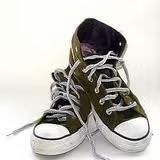
Springtime.  It brings the air of new life.  Blooming flowers send delicious aromas in small bursts through the warm breezy air.  It brings long days of children running through the grass, playing soccer and lacrosse, and bringing stinky shoes home to roost.  Thankfully, there are some easy ways to decrease the odor, bacterial content and potential fungi from thoroughly used shoes.
Washing.  If the shoes can take it, throw them in the wash.  Canvas shoes without much support can go through the washer without losing much shape.  Allow shoes to dry completely outside in the sunshine.  If shoes can not go into an agitator like a washer, you can make a solution of borax, vinegar and lemon juice added to a gallon of water.  Let shoes soak for 30 minutes.  Rinse and dry in the outside air.
Sunshine.  For supportive shoes or other shoes that cannot be washed in a traditional way, there are a few options.  First, dry shoes completely.  A damp shoe is a great place for bacteria and fungi to breed.  UV light from the sun is a deterrent to fungus and certain bacterial growth.  Sometimes just drying a shoe will decrease the odor.
Baking soda.   Baking soda is wonderful for decreasing odors and killing both bacteria and fungi.  For shoes that are routinely wet, make a mixture of baking soda, salt, water, and lemon juice into a paste.  Apply to the inside of the shoe and let dry for a few days.  When the mixture begins to crack off, bang shoes together to get rid of the remains.  Dust the inside of the shoe with cornstarch and wipe out.  If you have especially sensitive skin, baking soda may not be the best option.
Cedar.  Recycle old panty hose by filling with cedar shavings and tying off the ends.  Place in shoes each night.  The shavings will help to draw the moisture out of shoes and leave a fresh scent.
Vodka.  Fill a spray bottle with vodka and a few drops of your favorite essential oils.  Shake and lightly spray the inside of the shoe.  The alcohol will help dry the shoe and prohibit bacterial and fungal growth.
Coffee.  Place coffee grounds in a cheesecloth or recycled panty hose.  Leave overnight.  The coffee will absorb moisture and odors.  Do not use with lightly colored shoes as the coffee may stain the material.

Cleaning Your Pots With Natural Ingredients

Not too long ago, I visited my sister's house.  Normally, everything is in almost compulsive order.  On this day, however, a 5 quart stainless steel pot sat out of place near the kitchen sink.  A quick peek revealed the scorch marks left after a mishap with her home made oatmeal.  She tried for 3 days to scrub the pot clean and was ready to get rid of it completely.
Before discarding these items, consider the stain and the pot.  For this burned on mess of milk and carbohydrates, pour in enough lemon juice to cover the bottom of the pot.  Sprinkle a light coating of salt and let sit overnight.  In the morning, take a damp sponge or cloth and scrub lemon/salt mixture around stain.  It should lift almost instantly.
For greasy stains and messes, try scrubbing with salt alone.  For tougher stains, pour about 1 cup of vinegar into the pot.  Fill the rest with water (for big pots, add another half to full cup of vinegar) and boil for 5 minutes.  Then scrub with sponge and salt.
In place of a scrubber sponge, you can use a bit of crumbled aluminum foil.  If you have old panty hose to recycle, you can cut them and tie around a regular sponge or cloth and use as a scrubber.
Pots that have reached their limits as cookware can easily be recycled.  They make excellent planters, especially for seed starting.  They can even be painted, etched with sand, or dented to add character to a patio garden.  Pot tops can be used as bird feeders or baths.

Spring Window Cleaning

It is that time of the year again!  The weather is warming and the birds are singing.  The signs of winter are quickly becoming a memory.  Early spring is a great time to get the remnants of winter out of the house.  Open those windows and circulate that fresh air!\

Dry the condensation on the windows and clean the window sill.  Use a paste of baking soda and water to remove any mold or dirt stains in the tracks.  Clean windows with a vinegar/water solution and a squeegee.  Remove dirt from window screens by wiping both sides gently with a microfiber cloth.  Spray with an ample amount of vinegar, wipe with a damp sponge, then rinse with warm water.  Repeat on the other side of the window.

Dust blinds with a microfiber cloth.  Launder curtains and spray with your favorite freshener.

To make your own air freshener spray, grind a few teaspoons of your favorite spices (cloves, rosemary, oregano, or thyme), or add some essential oils (lemon or lavender) to distilled water with a few teaspoons of vodka.  Shake up and mist on curtains and around room.

Breathe deeply, and relax!

Stains... And the Natural Ways to Beat Them

Stains...no matter how hard we try, we can't get them out of our lives!  The good news is there are natural ways we can clean them when they do appear.

Try using lemon juice (an acid) to help with grass stains (alkaline).  White vinegar can also be used to combat grass stains.

Borax (alkaline) is a great cleaner for protein and acid stains.  Corn starch, diluted or sprayed on clothes, is very absorbent and works beautifully on protein stains.

Ditch the petroleum-based detergents and opt for vegetable-based soaps which are better for the environment.  Castile soap, which contains olive oil, is a great vegetable-based soap.  Use Castile soap or Washing soda on grease stains.

The water and bubbles in club soda work wonders in lifting acidic stains like berries and wine.

Cream of Tartar is color-safe and can be used on coffee or tea stains.

Borax, Washing soda, and white vinegar can be used on stains like tomato juice.